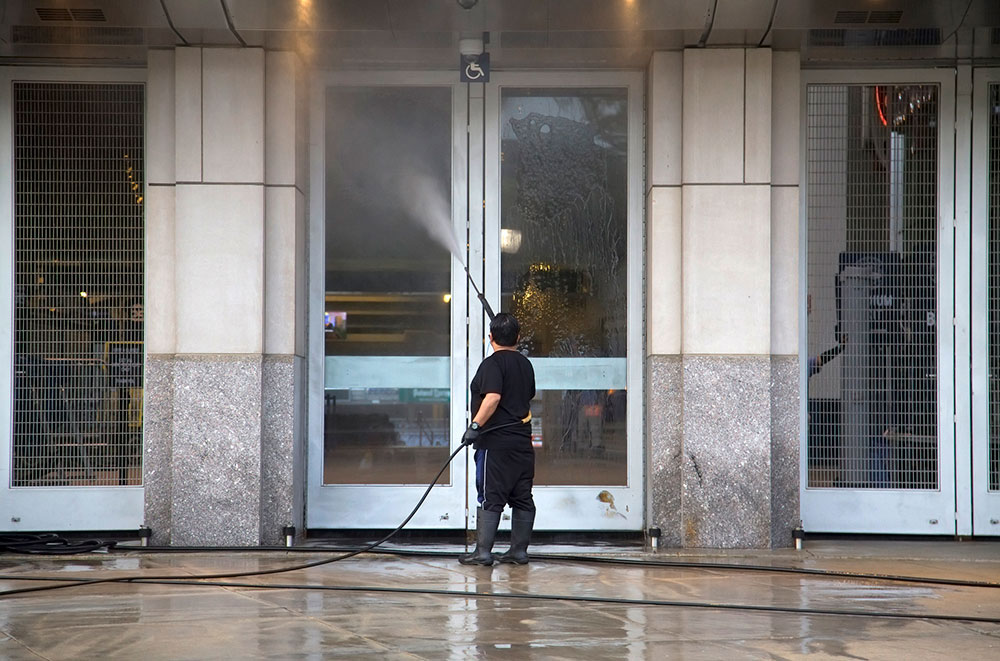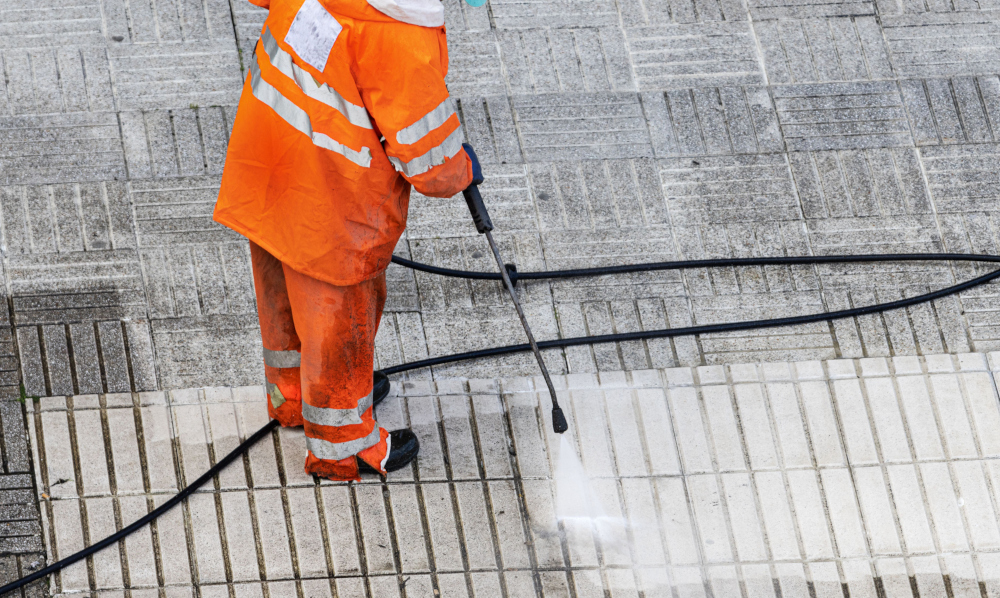
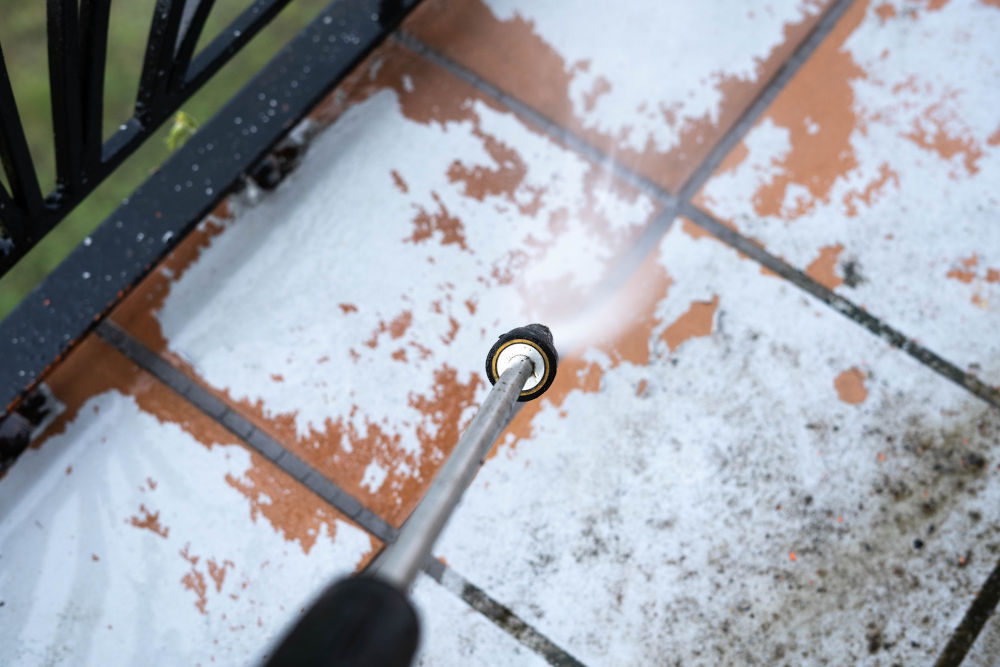
Commercial power washing services are not just about keeping a property clean – they prevent surface degradation, reduce slip risk, and control contamination before it becomes an operational problem. Dirt, grease, and organic buildup don’t stay cosmetic for long. Left untreated, they change how surfaces behave, how safe they are, and how quickly they deteriorate. Routine cleaning is what keeps those risks from compounding.
Why exterior cleaning should be treated as preventive maintenance
For many operators, building power washing is one of the most practical ways to treat exterior cleaning as preventive maintenance rather than a cosmetic fix. Most properties don’t look dirty until buildup becomes visible. By that point, it has already started affecting surface performance.
Concrete, asphalt, loading areas, and walkways are exposed daily to:
- vehicle residue
- grease and food waste
- moisture and organic growth
- airborne pollutants
None of this sits passively.
Grease reduces traction.
Organic matter holds moisture.
Dirt layers trap contaminants against surfaces.
The result isn’t just visual decline – it’s a gradual shift in how surfaces function.
Operators often schedule cleaning when things “look bad.”
In practice, the underlying issues start much earlier.
Key takeaways
- Exterior contamination builds gradually but affects safety early
- Slip risk increases before surfaces visibly appear dirty
- Grease and organic matter accelerate material wear
- Routine cleaning reduces long-term maintenance costs
- Preventive schedules are more effective than reactive cleaning
- Commercial pressure cleaning supports operational stability, not just appearance
Why business operators need to think beyond cosmetic cleaning
There’s a difference between a surface looking acceptable and performing properly.
A storefront entrance might appear clean but still be:
- slightly slippery under moisture
- holding embedded grease
- accumulating fine debris in surface pores
These changes are subtle. They don’t trigger immediate action – but they increase risk.
From an operational perspective, this affects:
- customer safety
- staff movement in high-traffic areas
- liability exposure
- long-term surface durability
Treating exterior cleaning as purely cosmetic ignores how quickly small changes scale into larger problems.
What builds up on commercial properties over time
Different environments accumulate different types of contamination, but the pattern is consistent – buildup is layered and progressive.
Common contaminants include:
- grease and oil from vehicles and food operations
- dirt and fine particulate from traffic and wind
- organic growth such as algae and mildew
- waste residue in loading and service areas
Each behaves differently.
Grease bonds to surfaces and spreads under foot traffic.
Organic growth retains moisture and softens materials.
Dirt fills surface texture, reducing drainage and increasing wear.
Over time, these layers interact – making surfaces harder to clean and more prone to damage.
Slip-risk reduction across high-traffic areas
Slip risk rarely comes from one obvious cause. It develops gradually.
Areas most affected include:
- entryways
- walkways
- loading zones
- service corridors
Grease and fine residue reduce surface grip, especially when combined with moisture.
Even a thin layer – not immediately visible – can change traction enough to create risk.
Routine commercial power washing removes these layers before they reach that point.
This is less about restoring a surface and more about preventing it from becoming unsafe.
Grease and contaminant control for exterior spaces
In food-related environments especially, contamination extends beyond the kitchen.
Grease travels:
- on shoes
- through waste handling
- via drainage and runoff
It accumulates in:
- dumpster areas
- rear service zones
- loading bays
Left unmanaged, this creates:
- persistent odours
- increased pest activity
- surface staining and breakdown
Cleaning at this stage is not cosmetic – it’s containment.
Routine commercial pressure cleaning helps prevent contamination from spreading across the property.
How routine power washing protects surfaces
Contaminants don’t just sit on top of materials – they interact with them.
Concrete and similar surfaces are porous.
Over time, they absorb:
- oils
- moisture
- organic material
This leads to:
- staining that becomes permanent
- gradual surface weakening
- increased susceptibility to cracking and erosion
Removing buildup early prevents it from embedding deeply.
Once contaminants penetrate, cleaning becomes less effective and restoration more costly.
Preventive cleaning is what keeps surfaces in a maintainable condition.
Preventive maintenance vs reactive cleaning
There are two ways most operators approach exterior cleaning:
Reactive approach
- cleaning scheduled when buildup is obvious
- visible staining or safety issues already present
- higher effort required to restore surfaces
Preventive approach
- cleaning scheduled based on usage and exposure
- contaminants removed before they accumulate
- surfaces maintained in stable condition
| Aspect | Reactive Cleaning | Preventive Cleaning |
|---|---|---|
| Timing | After visible issues | Before buildup becomes a problem |
| Cost | Higher over time | More predictable and controlled |
| Safety | Issues addressed late | Risk reduced early |
| Surface condition | Often degraded | Maintained consistently |
The difference is not frequency – it’s timing.
Where scheduled cleaning makes the most impact
Not all areas require the same level of attention.
High-impact zones include:
- entrances and storefronts
- parking structures and loading docks
- service corridors
- waste and dumpster areas
These areas experience:
- higher contamination rates
- more foot and vehicle traffic
- faster buildup accumulation
Targeting these zones with a structured schedule produces the most noticeable operational improvement.
How PressureKleen supports long-term exterior maintenance
Maintaining exterior performance requires consistency more than intensity.
A structured approach typically involves:
- identifying high-risk contamination areas
- aligning cleaning frequency with actual usage patterns
- maintaining records to track buildup trends over time
This shifts cleaning from an occasional task to part of ongoing maintenance planning.
For larger properties or multi-site operators, this consistency prevents the cycle of visible decline followed by intensive restoration.
FAQs
Why should commercial power washing be considered preventive maintenance?
Because contamination affects safety and surface condition before it becomes visible. Regular cleaning prevents issues rather than reacting to them.
How does commercial pressure cleaning reduce slip hazards?
It removes grease, dirt, and residue that reduce traction, especially in high-traffic or moisture-prone areas.
What types of buildup are typically removed?
Grease, oil, dirt, organic growth, and waste residue – all of which can impact safety and surface durability.
How often should a business schedule power washing?
It depends on traffic, environment, and usage. High-traffic and food-related areas generally require more frequent cleaning.
Does routine power washing help reduce long-term maintenance costs?
Yes. Preventing buildup reduces surface damage and avoids more intensive cleaning or repairs later.