Commercial kitchen exhaust systems don’t fail suddenly – they lose efficiency gradually. Grease buildup narrows airflow paths, increases pressure, and forces fans to work harder for less result. What looks like “still working” on the surface often means reduced capture, higher energy use, and uneven ventilation. Routine, full-system restaurant hood cleaning help restore proper airflow and keep the system performing as designed.
Why this matters in real kitchens
In a controlled environment, exhaust systems move a predictable volume of air. In a working kitchen, that balance shifts constantly – heat spikes, cooking methods vary, and airborne grease accumulates faster than most operators expect.
The issue is not just hygiene or compliance. It’s performance drift.
At first, nothing feels wrong. The hood still runs. Smoke clears – eventually. Staff adapt without noticing the change. But behind that, airflow resistance builds, and the system begins to compensate in inefficient ways.
Over time, this shows up as:
- slower smoke and heat removal
- higher temperatures near the line
- lingering odours after service
- increased fan noise or vibration
By the time these signs are obvious, the system is already working harder than it should.
Key takeaways
- Exhaust efficiency declines gradually, not suddenly
- Grease buildup reduces airflow and increases system resistance
- Fans compensate by working harder, which increases wear
- Vertical ducts and hidden sections accumulate the most unseen contamination
- Partial cleaning improves appearance but rarely restores performance
- Full-system commercial kitchen exhaust cleaning is what brings airflow back to baseline
What causes exhaust performance to decline over time
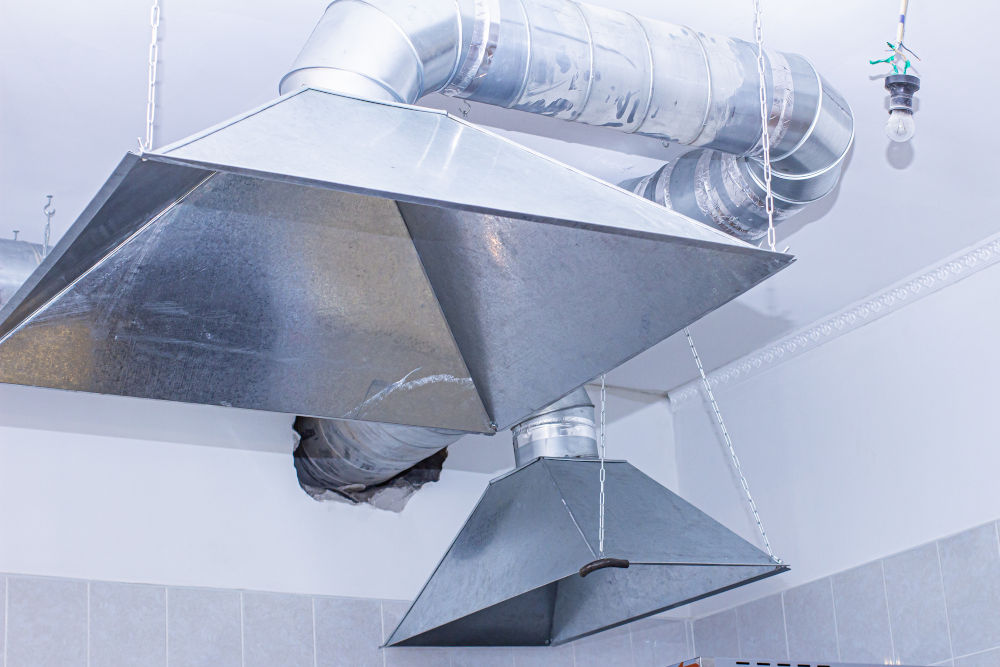
A commercial exhaust system is designed as a continuous airflow path: hood -> filters -> ducts -> fan -> discharge.
When clean, air moves with relatively low resistance. As grease accumulates, that path changes.
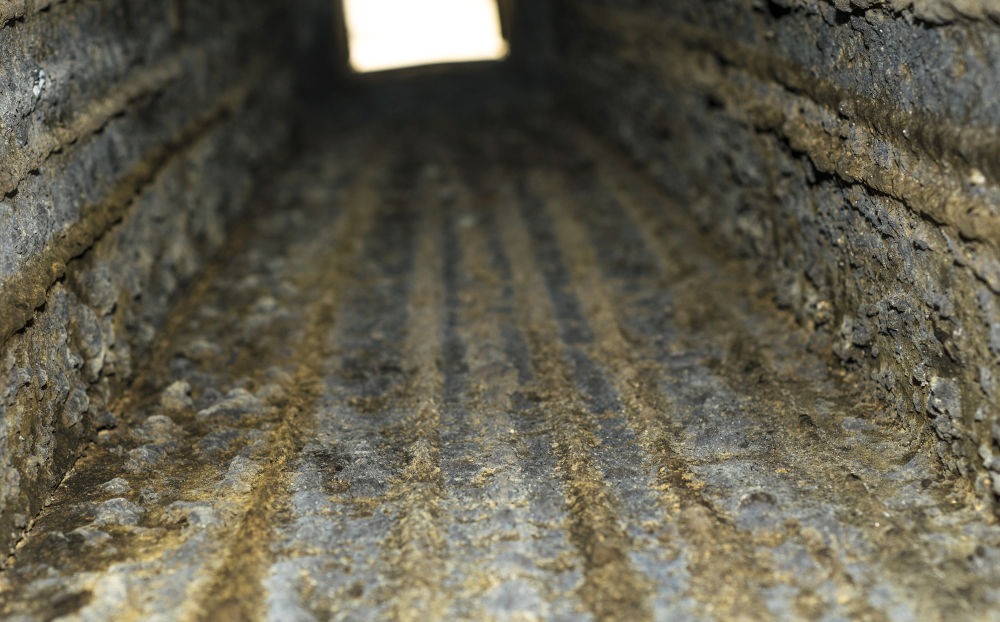
Grease doesn’t just “coat” surfaces – it alters the shape and behaviour of the system:
- duct walls become uneven and restrictive
- internal diameters effectively shrink
- airflow becomes turbulent rather than smooth
Instead of moving efficiently, air slows down, swirls, and loses velocity. The fan must then compensate by pulling harder to maintain flow.
This is where inefficiency begins – not from failure, but from resistance.
How grease buildup restricts airflow inside the system
Grease is not evenly distributed. It accumulates where airflow changes direction or slows down:
- elbows and horizontal runs
- transitions between duct sections
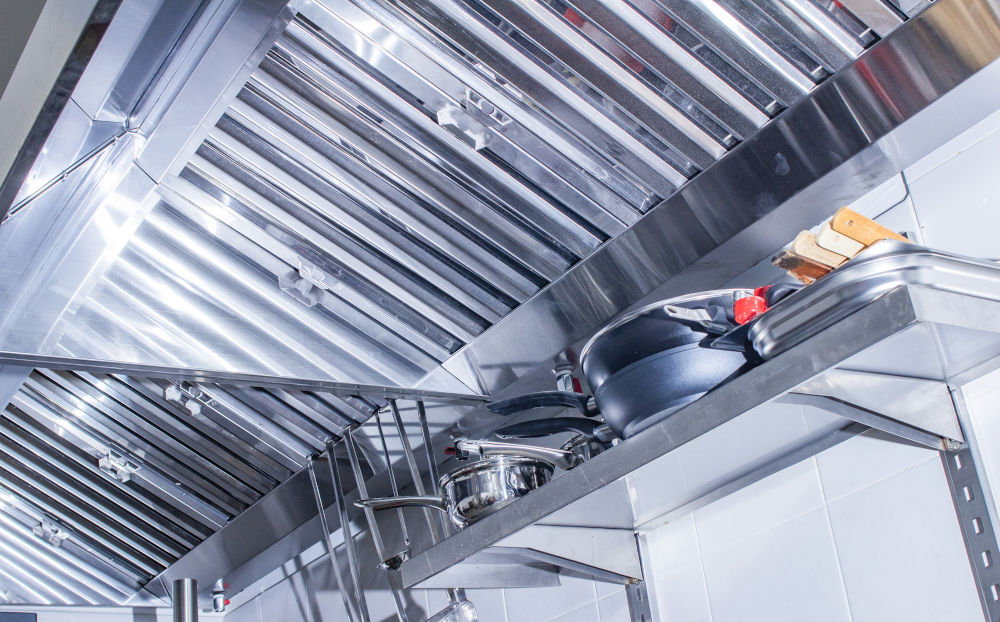
- areas behind filters
- vertical risers where vapour cools and condenses
Over time, this creates localized restrictions.
Think of it less like a uniform blockage and more like multiple pinch points along the system. Each one slightly reduces airflow. Combined, they significantly change how the system performs.
What happens next:
- airflow velocity drops at the hood
- capture becomes inconsistent
- heat and smoke escape into the kitchen before being removed
This is why a system can appear functional while actually underperforming.
System imbalance: why some areas get worse faster
Not all kitchens experience the same rate of buildup.
Several factors influence how quickly efficiency drops:
- cooking volume and intensity
- type of cuisine (high-fat vs low-fat cooking)
- hood design and positioning
- duct layout complexity
Within the same system, buildup is rarely uniform. One branch may be heavily restricted while another remains relatively clear.
This creates imbalance:
- some cooking stations ventilate properly
- others struggle with heat and smoke
- staff may adjust behaviour (changing positions, lowering heat, opening doors) to compensate
These workarounds mask the real issue – uneven airflow caused by contamination.
Increased fan load and mechanical strain
As resistance increases, the exhaust fan has to work harder to maintain airflow.
This leads to:
- higher energy consumption
- increased motor strain
- faster wear on bearings and components
- more noticeable noise or vibration
The system is effectively operating outside its intended conditions.
Instead of moving air efficiently, it is pushing against restriction. Over time, this reduces the lifespan of key components and increases the likelihood of mechanical issues.
Why vertical ducts and hidden sections create bigger problems
The parts of the system you don’t see are often the most affected.
Vertical ducts, in particular, accumulate grease differently:
- hot vapours rise, then cool as they travel upward
- grease condenses and adheres to duct walls
- buildup thickens over time, especially in long runs
Because these sections are not visible during daily operation, they are often overlooked.
Surface-level cleaning – wiping the hood, replacing filters – does not address these areas. From an operational standpoint, the system may look clean while remaining restricted internally.
This gap between appearance and function is one of the main reasons efficiency continues to decline unnoticed.
Operational signs your exhaust system is losing efficiency
Most kitchens don’t track airflow metrics directly. Instead, inefficiency shows up through everyday experience.
Common signs include:
- smoke or steam lingering longer than before
- noticeable heat buildup during peak hours
- grease deposits forming faster on nearby surfaces
- odours remaining after service
- increased fan noise or irregular operation
These are not isolated issues – they point to reduced airflow and system strain.
If multiple signs appear at once, the system is likely operating below its intended performance level.
Routine cleaning restores performance – not just appearance
There is a difference between cleaning for appearance and cleaning for function.
Surface cleaning improves how the system looks.
Full-system cleaning restores how it works.
A proper commercial kitchen exhaust cleaning process addresses:
- the full duct path, including vertical sections
- internal buildup that restricts airflow
- fan components affected by grease accumulation
When grease is removed from the system:
- airflow pathways open up
- resistance decreases
- the fan operates under normal load conditions again
This doesn’t “upgrade” the system – it returns it to how it was designed to perform.
What changes after proper cleaning
The difference is usually noticeable in day-to-day operation.
After full-system cleaning, kitchens typically see:
- faster smoke and heat extraction
- more consistent ventilation across stations
- reduced ambient temperature near cooking areas
- quieter, smoother fan operation
The system doesn’t just look cleaner – it behaves differently.
That shift is the clearest indication that efficiency had been lost and then restored.
How PressureKleen helps maintain exhaust system performance
Maintaining performance is not about reacting when problems appear – it’s about preventing buildup from reaching the point where it affects airflow.
A structured approach typically includes:
- assessing system layout and high-risk accumulation points
- scheduling cleaning based on actual kitchen usage, not generic timelines
- documenting condition and tracking changes over time
This turns exhaust cleaning from a reactive task into a maintenance process.
For operators managing multiple locations or high-output kitchens, that consistency matters more than occasional deep cleans.
FAQs
Does a commercial kitchen exhaust system become less efficient even if it still works?
Yes. Most systems continue operating while gradually losing efficiency. Reduced airflow, increased resistance, and higher fan load can exist long before visible failure.
Can grease buildup really affect airflow that much?
Over time, yes. Even moderate buildup changes the internal geometry of ducts, increasing resistance and reducing airflow velocity where it matters most – at the hood.
Why are vertical ducts important in exhaust cleaning?
They accumulate grease differently and are not visible during daily use. If left untreated, they become major restriction points that impact the entire system.
How often should a system be cleaned?
It depends on usage, cooking type, and system design. High-volume kitchens require more frequent full-system cleaning than low-output operations.
Does cleaning improve ventilation performance or just hygiene?
Both. Professional commercial hood cleaning improves hygiene, but its operational value is often even greater. In restaurant hood cleaning, removing internal buildup helps restore airflow efficiency and reduces strain on the exhaust system.