A hood can look clean from the cooking line and still hide a problem above it.
That is the part many restaurant teams do not see. The stainless steel gets wiped. Filters get washed. The hood face looks fine during prep. But grease does not stop at the hood just because the visible area was cleaned.
Some of it keeps moving.
Hot vapour rises from fryers, grills, ranges, woks, charbroilers, and ovens. The hood catches most of that movement and pulls it upward. Filters trap part of the grease, but not all of it. Fine residue passes through, cools as it travels, then sticks to metal inside the plenum, ductwork, bends, seams, access panels, and fan connection points.
That is why commercial kitchen exhaust cleaning has to cover more than what staff can see from the floor. The hidden duct is often where the real buildup sits.
Key Takeaways
- Grease can build up inside kitchen exhaust ducts even when the visible hood looks clean.
- Hood filters reduce grease movement, but fine residue can still pass into the plenum, ductwork, bends, seams, and fan connection points.
- Hidden duct grease can restrict airflow, making the kitchen hotter, smokier, and harder to ventilate.
- Heavy grease buildup inside ducts increases fire risk because grease can act as fuel if flames enter the exhaust system.
- Old grease, smoke residue, and food particles inside ductwork can contribute to lingering odours.
- Surface-level hood cleaning does not confirm that the full exhaust path has been cleaned.
- Full commercial kitchen exhaust cleaning should address accessible hood interiors, filters, plenums, duct access points, fan housing, fan blades, and connected rooftop components where applicable.
A clean hood is not proof of a clean exhaust system
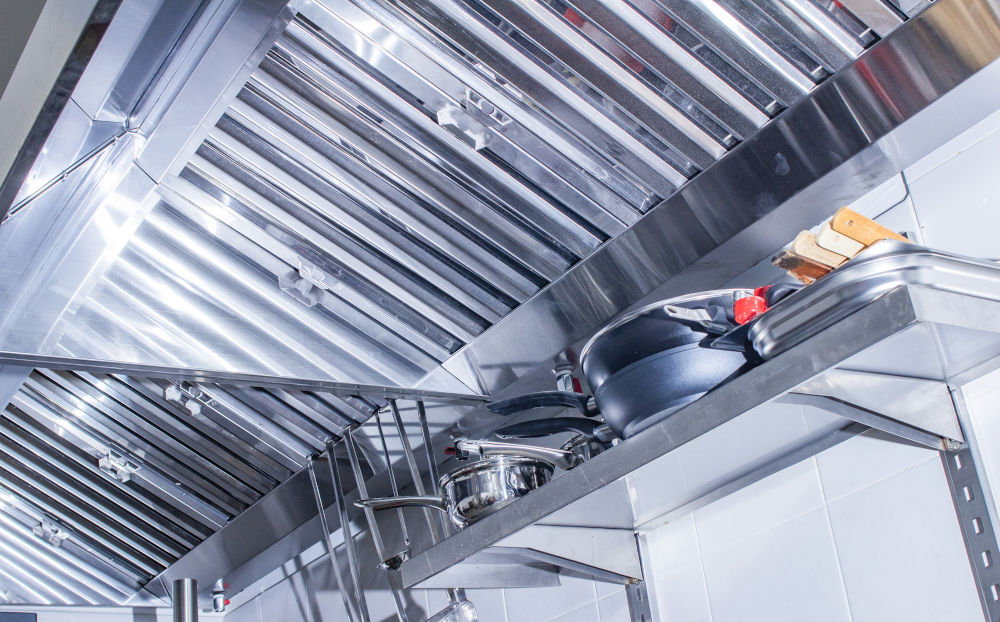
The hood gets attention because it is visible. If it looks greasy, everyone knows. If it smells, staff complain. If filters drip, the problem is obvious.
The duct is different.
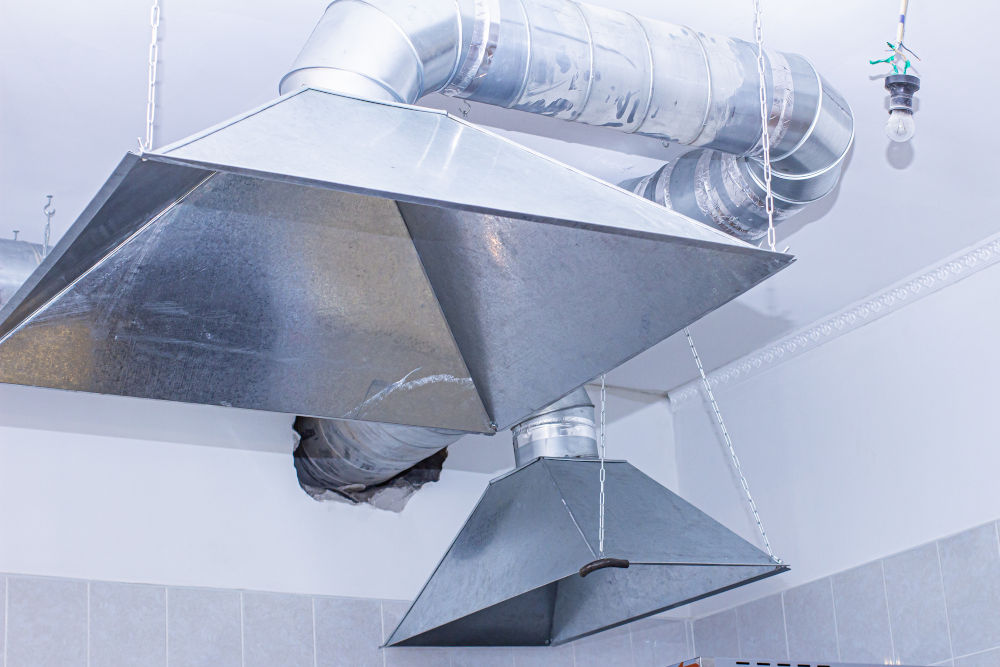
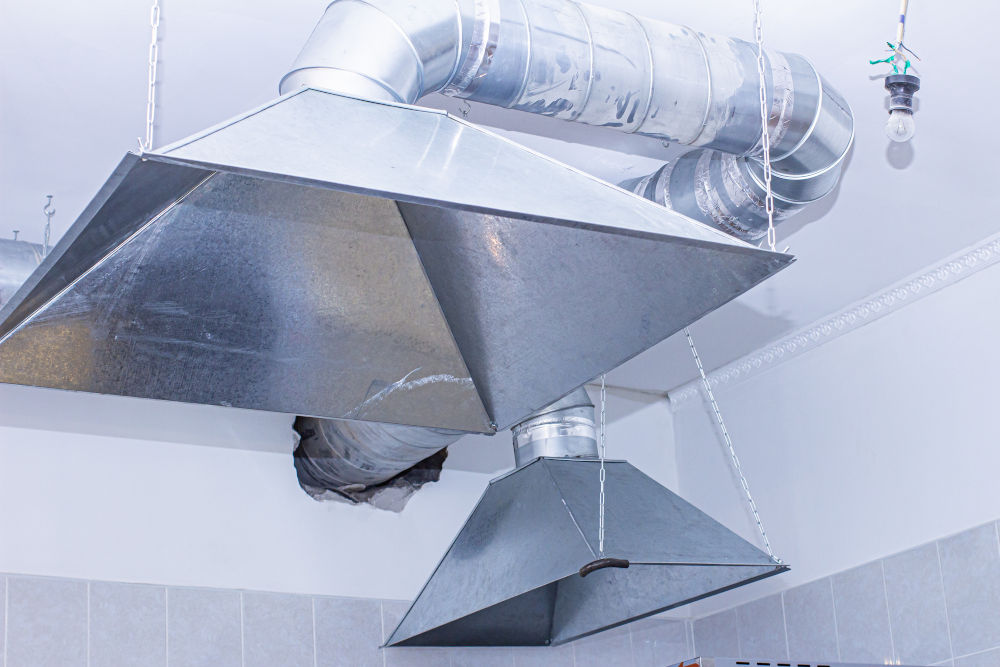
It runs above the ceiling, through walls, up shafts, across horizontal runs, or out to a rooftop fan. Nobody is looking inside it during a regular shift. A restaurant may pass through weeks of heavy cooking before anyone thinks about what is sitting inside the exhaust path.
That hidden space matters because it carries the same grease-laden air that leaves the cooking area. Every service adds a little more residue. Some systems collect slowly. Others collect fast because of the menu, cooking volume, filter condition, duct layout, fan pull, or poor access for previous cleaning.
A quick wipe-down may make the hood look better. It does not remove grease from a duct bend 15 feet away.
How grease gets inside kitchen exhaust ducts
Grease starts as vapour and tiny airborne particles.
When food cooks, especially over high heat or oil, the air above the equipment carries moisture, smoke, and grease. The exhaust fan pulls that air through the hood filters and into the system. Filters reduce the grease load, but they are not a wall. Fine particles still pass through.
Once the air moves away from the heat source, it begins to cool. Cooled grease sticks more easily. It lands on metal surfaces inside the plenum and duct. If the duct has bends, rough seams, low points, or long horizontal sections, buildup often collects there first.
This is not unusual. It is how busy kitchen exhaust systems age between cleanings.
The problem starts when that normal residue becomes a heavy layer.
Where grease tends to hide
Kitchen exhaust ducts are not smooth, simple tubes in perfect condition. They often have turns, seams, panels, vertical shafts, horizontal runs, elbows, and connection points. Those details affect where grease lands.
| Area inside the system | What usually happens there | Why it matters |
|---|---|---|
| Hood plenum | Grease collects behind the filters | Easy to miss if only the front hood surface is cleaned |
| Horizontal duct runs | Residue settles along the lower surface | Buildup can become thick because gravity helps it collect |
| Vertical duct shafts | Grease sticks to walls and seams | Hard to inspect without proper access |
| Duct bends and elbows | Airflow slows and grease drops out | These areas often hold heavier deposits |
| Welds, seams, and joints | Grease catches on rough edges | Small deposits grow over time |
| Access panels | Residue builds around openings | Poor access can leave sections partially cleaned |
| Fan connection points | Grease gathers near the discharge path | Buildup can continue toward the rooftop fan |
A restaurant owner may never see these areas unless photos are taken during service. That is why documentation matters. “Hood cleaned” does not say much. “Plenum, duct access points, fan housing, and discharge areas cleaned” tells a very different story.
Airflow usually suffers before anyone notices the duct
A grease-heavy duct does not always announce itself right away.
The kitchen may simply feel hotter. Smoke may linger over the line longer than usual. Cooking odours may drift into prep areas or the dining room. Staff may prop doors open because the back of house feels stale. A manager may blame the weather, the HVAC, or a busy dinner rush.
Sometimes those things do play a role. But duct buildup can be part of the picture.
As grease accumulates, the exhaust pathway becomes less efficient. Air has less clean space to move through. Bends and narrow areas become more restrictive. The fan has to work harder to pull air through the system. If filters are dirty at the same time, the problem becomes more noticeable.
Poor airflow affects more than comfort. It can change heat removal, smoke capture, odour control, and the general feel of the kitchen during service. Staff may not use technical language for it. They will just say the hood is not pulling like it used to.
Grease inside ducts changes the fire risk
Grease is fuel. Inside an exhaust duct, that matters.
If flames flare up on the cooking line and reach the hood, any heavy grease inside the system becomes a concern. The duct can carry heat and flame beyond the visible kitchen area. Grease deposits inside bends, shafts, and horizontal runs may help a fire move where staff cannot reach it.
This is one reason kitchen exhaust cleaning is treated as a safety issue, not a cosmetic service.
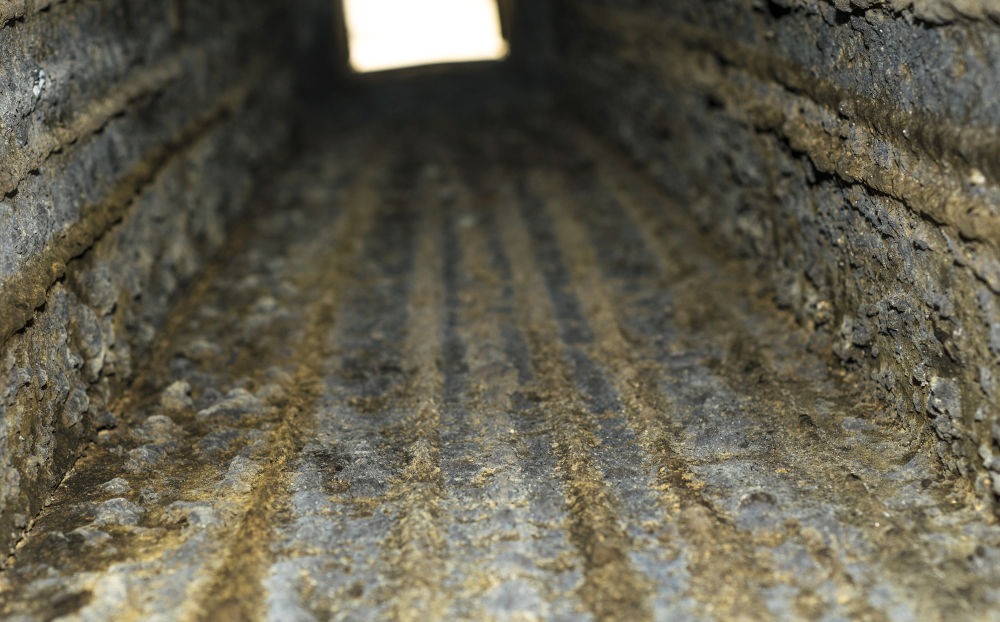
The highest risk is not usually the thin film that appears shortly after cleaning. It is the older, thicker buildup that has been left through repeated cooking cycles. Dark, sticky, layered grease is harder to remove and more dangerous to leave in place.
For restaurant operators, the practical point is simple: the hood is only the entry point. If grease remains inside the duct, the system is still carrying risk.
Odour and smoke problems can come from the duct
Not every odour problem starts in the dining room, garbage area, or grease trap.
Old grease inside ductwork can hold smell. When the system heats up during service, odours may become more noticeable. Smoke residue and food particles can cling to the same areas where grease settles. If airflow is weak, cooking smells may drift instead of being pulled cleanly through the system.
This can be frustrating because the kitchen may look clean. Staff may have cleaned the hood face, changed filters, wiped surfaces, and emptied bins, yet the smell remains.
The hidden duct is worth checking in that situation.
A grease-heavy duct can also affect smoke movement. If air is not moving properly, smoke may spill from the hood area or linger near the cooking line. In high-volume kitchens, even a small airflow problem can become irritating during peak service.
That is why restaurant hood cleaning alone may not solve odour or smoke complaints. The system has to be checked beyond the hood.
Surface-level hood cleaning has limits
A shiny hood can be misleading.
Wiping stainless steel removes visible grease. Washing filters helps. Cleaning the hood canopy matters. None of that is wasted work. But those steps do not prove the exhaust path is clean.
The difference is access.
Surface cleaning deals with what can be reached easily from the kitchen side. Professional exhaust cleaning opens the system where possible and follows the grease path: hood, filters, plenum, ducts, fan, and discharge area.
The hidden parts are not optional. They are where grease continues to travel after it leaves the visible hood.
This is especially important in restaurants with heavy fryers, charbroilers, wok cooking, long operating hours, or older exhaust layouts. Those systems can build residue quickly. If previous cleanings were limited to the hood area, the duct may already be carrying old deposits.
What to look for before the problem gets worse
A restaurant manager does not need to inspect the duct personally. But there are warning signs worth taking seriously.
| What you notice | What it may suggest |
|---|---|
| Smoke lingers near the cooking line | Exhaust airflow may be restricted |
| Kitchen feels hotter than usual | Heat may not be leaving efficiently |
| Cooking odours drift into other areas | Grease or poor airflow may be affecting the system |
| Filters get greasy very quickly | Cooking volume may require more frequent service |
| Grease appears around hood edges | Buildup may be heavier than the current schedule allows |
| Cleaning records only mention the hood | Duct and fan areas may not have been fully serviced |
| No access panels or poor access notes | Some duct sections may not be properly reachable |
| Fan sounds strained or airflow feels weak | The system may need inspection beyond the hood |
| Odour returns soon after cleaning | Hidden grease may remain in the duct or fan |
One sign alone does not prove the duct is loaded with grease. But several signs together usually mean the exhaust system should be checked properly.
What full-system cleaning should cover
A proper service should follow the grease path.
That means the work starts at the hood but does not end there. The cleaner should address accessible hood interiors, filters, plenums, duct access points, fan housing, fan blades, and other connected components where grease can collect. If the system has hard-to-reach areas, those limitations should be documented.
This matters because ducts are not always designed with cleaning in mind. Some older buildings have awkward runs. Some systems have missing or poorly placed access panels. Some fans are hard to open safely. Those details should not be hidden from the restaurant owner.
Good service documentation should show what was cleaned, what was found, and what could not be accessed. Photos are helpful because they show the difference between a clean-looking hood and the actual duct condition.
The goal is not just to leave the kitchen looking better. It is to reduce hidden grease, support airflow, lower fire risk, and give the operator a clearer record of the system’s condition.
How Pressure Kleen helps manage hidden duct grease
Pressure Kleen handles commercial kitchen exhaust cleaning with the full exhaust path in mind.
That includes the visible hood area, but also the places grease often hides: plenum sections, duct access points, fan components, rooftop areas where applicable, and grease-affected surfaces connected to the system. The exact scope depends on access, layout, buildup level, and safety conditions, but the principle stays the same. Cleaning should follow the grease, not stop where the stainless steel looks clean.
For restaurants, this is especially useful because cleaning frequency is not the same for every kitchen. A light-use café, a pizza kitchen, a burger restaurant, a wok station, and a charbroiler-heavy operation do not create the same grease load. The schedule should reflect real cooking conditions.
Pressure Kleen can also help identify areas that need better access, closer monitoring, or more frequent cleaning. That information is often just as important as the cleaning itself. A restaurant with poor documentation may not know whether the duct was properly serviced last time. Clear records help managers plan, respond to inspections, and avoid treating exhaust cleaning as guesswork.
FAQs
Can grease build up inside kitchen exhaust ducts?
Yes. Grease can build up inside kitchen exhaust ducts when airborne cooking residue passes through hood filters and travels into the plenum and ductwork. As the vapour cools, grease sticks to metal surfaces inside the system.
Why does my hood look clean if the ducts are dirty?
The hood is visible and easier to wipe down, while the duct is hidden above the ceiling, behind walls, or on the way to the fan. A clean hood surface does not prove the plenum, ductwork, or fan has been cleaned.
How often should kitchen exhaust ducts be cleaned?
Cleaning frequency depends on cooking volume, equipment type, menu, hours of operation, and the amount of grease produced. Heavy fryer, charbroiler, wok, or high-volume kitchens usually need more frequent service than light-use kitchens.
Does restaurant hood cleaning include ductwork?
Complete restaurant hood cleaning should include accessible parts of the exhaust system, including the hood, filters, plenum, ductwork, and fan. Some basic cleaning services may focus only on visible areas, so the scope should always be confirmed.
Can grease inside ducts affect airflow?
Yes. Heavy grease buildup can restrict airflow and make the exhaust system less effective. Signs may include lingering smoke, stronger odours, excess heat, or a hood that seems to pull poorly.
Can duct grease cause odours?
Yes. Old grease, smoke residue, and food particles inside the duct can hold odours. When the system heats up during cooking, those smells may become more noticeable.
What is included in commercial kitchen exhaust cleaning?
Commercial kitchen exhaust cleaning may include the hood, filters, plenum, duct access points, fan housing, fan blades, and connected rooftop components where applicable. The exact scope depends on the system design and safe access.