A restaurant hood can look clean from the kitchen floor and still have grease building up inside filters, plenums, ductwork, fan areas, and rooftop exhaust components. That hidden grease is the real concern. It affects fire risk, airflow, odour control, system performance, and maintenance documentation. Proper restaurant hood cleaning should not stop at the visible stainless steel. For most commercial kitchens, the safer standard is a full hood-to-rooftop cleaning approach that follows the exhaust path from the cooking line to the discharge point.
Table of Contents
- Why a Clean-Looking Hood Can Still Hide a Serious Problem
- Key Takeaways for Restaurant Operators
- What Surface-Level Hood Cleaning Usually Misses
- Hidden Grease Behind Filters and Inside Ductwork
- Why Rooftop Exhaust Components Matter Too
- How Hidden Grease Increases Fire Risk
- NFPA 96 Expectations: Cleaning the Exhaust System, Not Just the Hood
- Surface Cleaning vs Full Hood-to-Rooftop Cleaning
- Operational Signs Your Exhaust System Needs More Than Surface Cleaning
- How PressureKleen Provides More Complete Exhaust Cleaning
- FAQs
Why a Clean-Looking Hood Can Still Hide a Serious Problem
In a busy restaurant, visible cleanliness matters. Staff wipe stainless steel, filters are removed and washed, the cooking line is cleaned down, and the hood canopy may look presentable at opening time. From the floor, everything can appear under control.
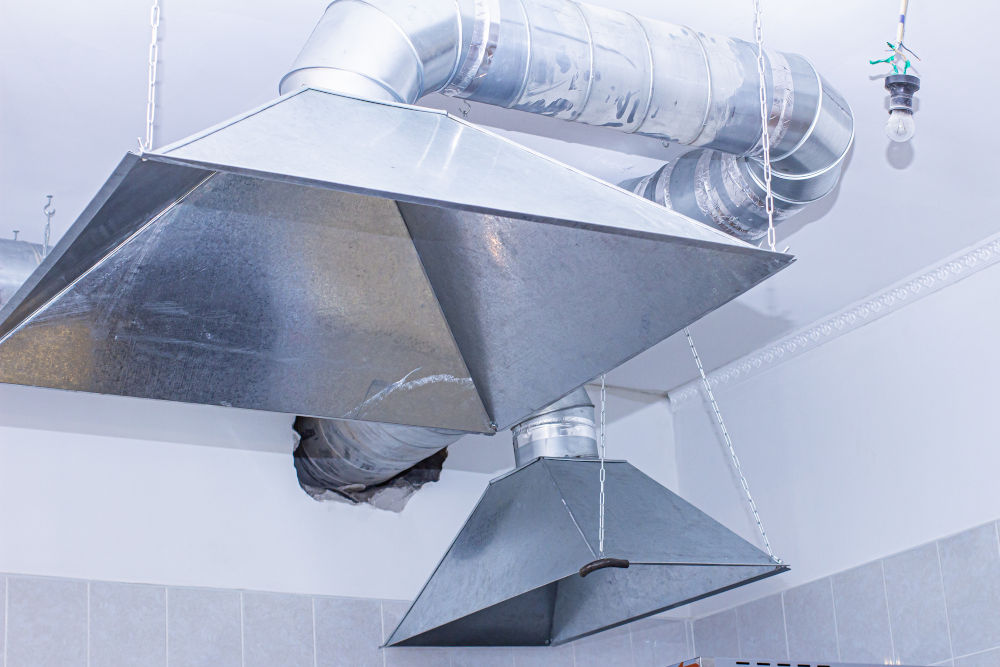
The problem is that a commercial kitchen exhaust system is not only the hood you can see. It is a connected pathway. Grease-laden vapours rise from cooking equipment, pass through filters, enter the plenum, move through ductwork, and discharge through the fan system on the roof or exterior wall. When cleaning only addresses the visible hood surface, the system may still be carrying grease in places no kitchen employee can easily inspect.
That is why commercial hood cleaning should be treated as a fire-risk and maintenance issue, not only a housekeeping task. A polished canopy does not prove that duct interiors, access panels, fan blades, grease trays, or rooftop discharge areas are clean.
Pressure-Kleen describes professional exhaust cleaning as work that protects restaurants from grease fires and supports adherence to NFPA 96 expectations for kitchen exhaust inspection and cleaning.
Key Takeaways for Restaurant Operators
| Issue | Why It Matters |
|---|---|
| Surface cleaning only removes what can be seen | Grease may remain behind filters, in ducts, and around exhaust fans |
| Hidden grease can affect fire safety | Grease deposits can act as fuel if ignition occurs |
| Airflow can decline gradually | Restricted exhaust paths may make the kitchen hotter, smokier, or harder to ventilate |
| Rooftop areas are part of the system | Fan housing, grease containment, and roof protection can all be affected |
| Documentation matters | Restaurants may need cleaning records for inspections, landlords, insurers, or internal maintenance files |
| Cleaning frequency depends on use | High-volume, charbroiling, frying, and solid-fuel cooking operations usually need closer attention |
What Surface-Level Hood Cleaning Usually Misses
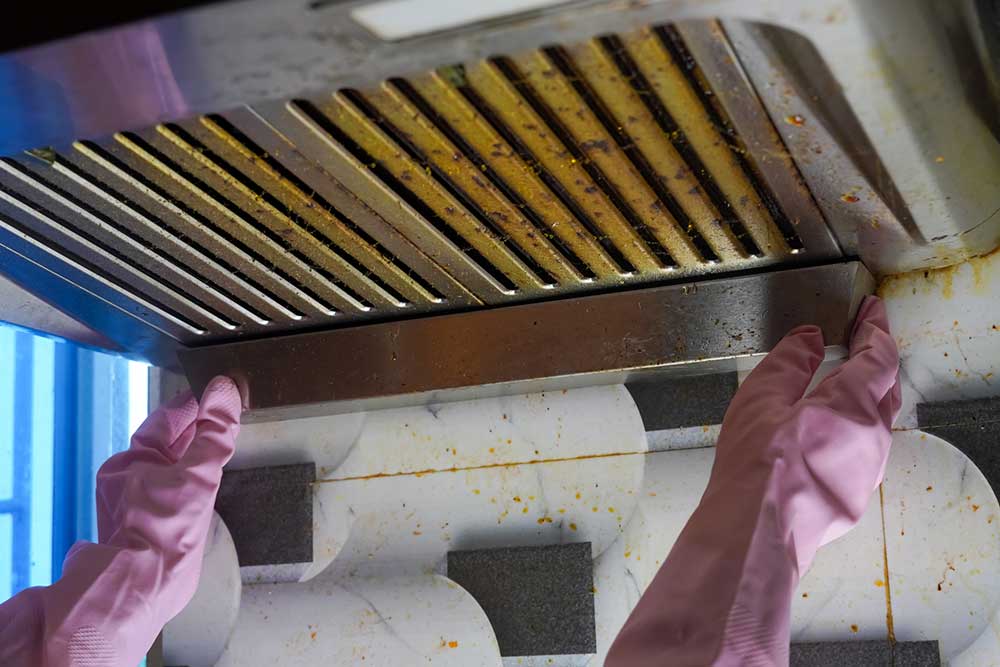
Surface-level cleaning usually means wiping the outside of the hood canopy, polishing visible stainless steel, and sometimes washing removable filters. This can improve appearance and reduce some immediate grease residue around the cooking line. It does not confirm that the full exhaust system is clean.
A basic wipe-down often misses:
- grease behind and above filters
- buildup inside the plenum
- grease residue around fan openings
- duct interiors
- vertical and horizontal duct runs
- elbows and transitions
- access panels
- fan blades and fan housing
- grease trays and grease cups
- rooftop discharge areas
- grease staining or saturation near the roof fan
These areas matter because the exhaust system works as one connected route. If one part is neglected, grease can continue to accumulate even when the hood face looks clean.
For restaurant owners and kitchen managers, the difference is practical. A clean surface helps the kitchen look better. A properly cleaned exhaust path helps reduce hidden buildup in the places most associated with ventilation problems and fire exposure.
Hidden Grease Behind Filters and Inside Ductwork
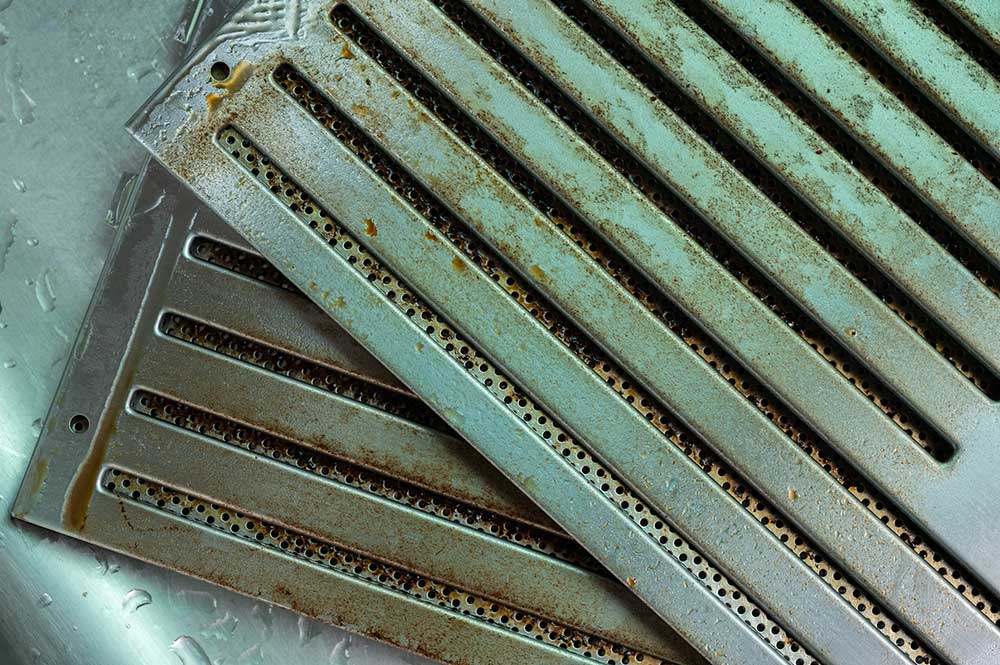
Filters are designed to catch grease, but they do not make the rest of the system grease-free. Some vapour, smoke, and fine grease particles still pass through. Over time, residue can collect behind the filters, in the plenum, and along the ductwork.
This is especially common in kitchens that rely heavily on frying, grilling, wok cooking, charbroiling, or long service hours. The more grease-laden vapour the kitchen produces, the more pressure the exhaust system is under.
Hidden buildup can form in layers. It may start as a sticky film, then thicken around corners, seams, and areas where airflow slows. Horizontal duct runs, elbows, and access points are common problem areas because grease does not always move evenly through the system.
The risk is that this buildup stays out of sight. A manager may see clean filters and a shiny hood canopy, while the duct interior tells a different story.
Why Rooftop Exhaust Components Matter Too
Many restaurant operators think of hood cleaning as a kitchen job. In reality, rooftop exhaust components are part of the same system.
The fan draws air through the hood and ductwork. If grease reaches the fan housing, blades, motor area, grease tray, or roof surface around the fan, the restaurant may be dealing with more than an appearance issue. Grease on the roof can damage surfaces, create odour concerns, attract pests, and signal that the exhaust system is not being controlled properly.
Rooftop checks also help identify practical maintenance problems. Pressure-Kleen notes that rooftop fan hinges and chains should allow the fan to be lifted safely and that roof protection from grease saturation requires a professional eye.
This is one reason complete commercial kitchen exhaust cleaning should follow the system from hood to discharge point. Stopping at the kitchen ceiling leaves out a major part of the equipment.
How Hidden Grease Increases Fire Risk
Grease is not just dirt. In a commercial kitchen, it can become fuel.
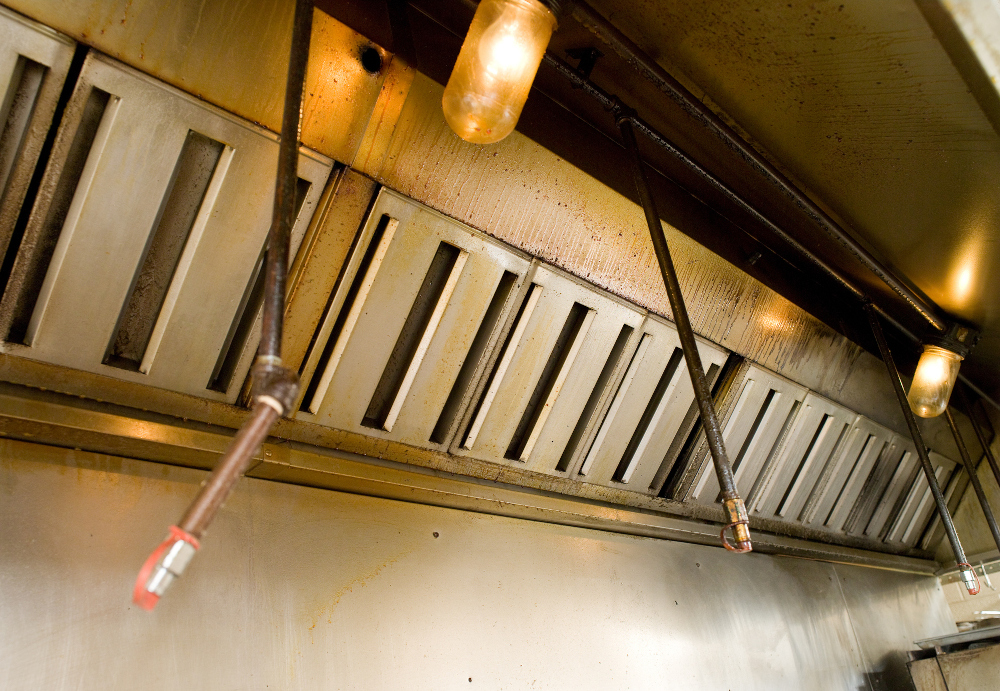
Cooking equipment produces heat, flame, sparks, vapour, and oil residue. If grease has built up in the hood, filters, plenum, ducts, or exhaust fan, a fire can move beyond the cooking surface into the exhaust system. Once fire enters ductwork, it can become harder to control and may spread into concealed areas of the building.
NFPA notes that commercial cooking equipment producing grease-laden vapours requires ventilation and fire protection because of the hazards involved. NFPA also states that the entire exhaust system should be inspected for grease buildup by properly trained, qualified, and certified people.
For restaurant operators, the lesson is simple: the dangerous grease is often the grease nobody sees during a quick surface clean.
NFPA 96 Expectations: Cleaning the Exhaust System, Not Just the Hood
NFPA 96 is widely used as a reference point for ventilation control and fire protection in commercial cooking operations. Pressure-Kleen’s own learning centre notes that NFPA 96 has provided minimum fire safety standards for commercial cooking ventilation and fire protection since 1946.
The key point for restaurant owners is that NFPA 96-style maintenance is not based on whether the visible hood looks polished. The focus is the exhaust system as a whole.
That usually means attention to:
- hoods
- grease removal devices
- filters
- plenums
- ducts
- fans
- access panels
- grease collection points
- related exhaust components
Cleaning frequency can vary based on cooking volume, menu type, hours of operation, and the amount of grease produced. A small café with light cooking does not create the same exhaust load as a high-volume restaurant using fryers, charbroilers, or wok stations all day.
This is why restaurant hood cleaning should be planned around actual kitchen use, not only a calendar reminder or a quick visual check.
Surface Cleaning vs Full Hood-to-Rooftop Cleaning
| Area Checked or Cleaned | Surface-Level Hood Cleaning | Full Hood-to-Rooftop Cleaning |
|---|---|---|
| Visible hood canopy | Yes | Yes |
| Exterior stainless steel surfaces | Yes | Yes |
| Removable filters | Sometimes | Yes |
| Behind filters | Usually no | Yes |
| Plenum area | Usually no | Yes |
| Duct interiors | No | Yes, where accessible |
| Access panels | No | Yes |
| Exhaust fan housing | No | Yes |
| Fan blades | No | Yes |
| Grease trays and cups | Sometimes missed | Yes |
| Rooftop discharge area | No | Yes |
| Deficiency reporting | Rare | Yes, when observed |
| Cleaning documentation | Often limited | More complete |
The difference is not cosmetic. It is the difference between cleaning the part of the system that is easiest to see and cleaning the path where grease actually travels.
Operational Signs Your Exhaust System Needs More Than Surface Cleaning
Restaurants do not always notice exhaust issues immediately. Problems often build gradually, especially when the hood face is being wiped regularly but deeper areas are not being inspected.
Watch for these signs:
- smoke does not clear as quickly as it used to
- the kitchen feels hotter during normal service
- odours linger after closing
- grease returns quickly after cleaning
- filters feel heavy, sticky, or difficult to clean
- grease appears around hood edges
- staff notice dripping near the hood or duct access points
- rooftop grease staining is visible
- exhaust fan noise changes
- air movement feels weaker near the cooking line
- previous cleaning reports are vague or incomplete
- inspectors, landlords, or insurers request better documentation
One sign alone does not prove the full system is heavily contaminated. But several together usually suggest the restaurant needs a proper exhaust inspection and deeper cleaning, not another surface wipe.
How PressureKleen Provides More Complete Exhaust Cleaning
PressureKleen’s approach is built around the idea that restaurant exhaust cleaning should not stop at what the kitchen team can see. The work should address the system as a connected pathway, with attention to the hood, filters, duct access, fan areas, and rooftop components where grease can collect.
For restaurant operators, that matters in several ways.
First, it gives a clearer picture of the system’s real condition. If grease is collecting in ductwork or near the rooftop fan, the restaurant should know before it becomes a larger safety or maintenance issue.
Second, it supports better documentation. Restaurants may need service records for internal maintenance files, building management, insurance questions, franchise compliance, or fire-safety inspections.
Third, it helps operators avoid the false comfort of a clean-looking hood. A shiny canopy is good, but it is not enough on its own.
Pressure-Kleen also emphasizes trained work, professional responsibility, and reporting visible deficiencies in the exhaust system, such as ductwork issues, missing guards, broken filters, fan access problems, and roof grease concerns.
For single-location restaurants, franchise operators, and multi-site foodservice businesses, that kind of complete cleaning is usually the more practical choice. It protects the kitchen, supports compliance expectations, and reduces the chance that hidden grease is left to build between service visits.
FAQs
Is restaurant hood cleaning the same as wiping the hood after service?
No. Wiping the hood after service is daily housekeeping. Restaurant hood cleaning, when done properly, addresses the exhaust system more deeply, including filters, plenums, ducts, fan areas, and other grease collection points. Both are useful, but they do not replace each other.
Why does grease build up behind hood filters?
Filters capture a portion of grease-laden vapour, but they do not stop everything. Fine grease particles and residue can still pass through into the plenum, ducts, and exhaust fan. This is why filter cleaning alone does not confirm that the rest of the system is clean.
Does NFPA 96 require duct and fan cleaning?
NFPA 96-style maintenance focuses on the commercial cooking exhaust system, not only the visible hood. NFPA guidance refers to inspection of the entire exhaust system for grease buildup, which is why ducts, fans, grease removal devices, and related components matter.
Can a clean-looking hood still have hidden grease?
Yes. The visible canopy can look polished while grease remains behind filters, inside the plenum, along ductwork, or around the rooftop fan. This is one of the main reasons restaurants should not rely on appearance alone.
How often should restaurant hood cleaning be done?
The right frequency depends on cooking volume, equipment type, menu, hours of operation, and how much grease the kitchen produces. High-volume frying, grilling, charbroiling, and wok cooking usually require more frequent attention than light-duty cooking.
Why is hood-to-rooftop cleaning important for fire-risk reduction?
Grease can collect throughout the exhaust path. If a fire starts at the cooking line and reaches grease inside the hood or ducts, it can spread beyond the visible cooking area. Hood-to-rooftop cleaning helps reduce hidden grease deposits in the system.
What documentation should restaurants keep after hood cleaning?
Restaurants should keep service dates, cleaning reports, technician notes, photos if provided, deficiency reports, and any recommendations for repair or follow-up. These records can be useful for inspections, insurance questions, landlords, franchise systems, and internal maintenance planning.
What is the difference between commercial hood cleaning and commercial kitchen exhaust cleaning?
Commercial hood cleaning often refers to the hood area itself. Commercial kitchen exhaust cleaning is broader and usually includes the full exhaust path: hood, filters, plenum, ductwork, fan, grease collection points, and rooftop or exterior discharge areas.