In a food court, each restaurant usually books its own kitchen exhaust cleaning, and each contract usually stops where the tenant’s branch duct meets the shared trunk or riser. Those common ducts and the rooftop fan they feed can go uncleaned for years while every tenant holds a current service report. For a property manager, that leaves two questions: who is responsible for the common section, and how to get the whole system cleaned on one schedule.
Key takeaways
- Tenant contracts usually cover the hood, filters and branch duct. The shared trunk or riser and the rooftop fan need a scope of their own.
- The lease decides who arranges and pays for each part. Under NFPA 96, responsibility stays with the system owner unless it has been transferred in writing.
- A shared system is cleaned as one coordinated job, timed around the hours of every kitchen connected to it.
- Property management needs one building-wide record of when each section was cleaned and what couldn’t be reached.
What a shared exhaust system looks like
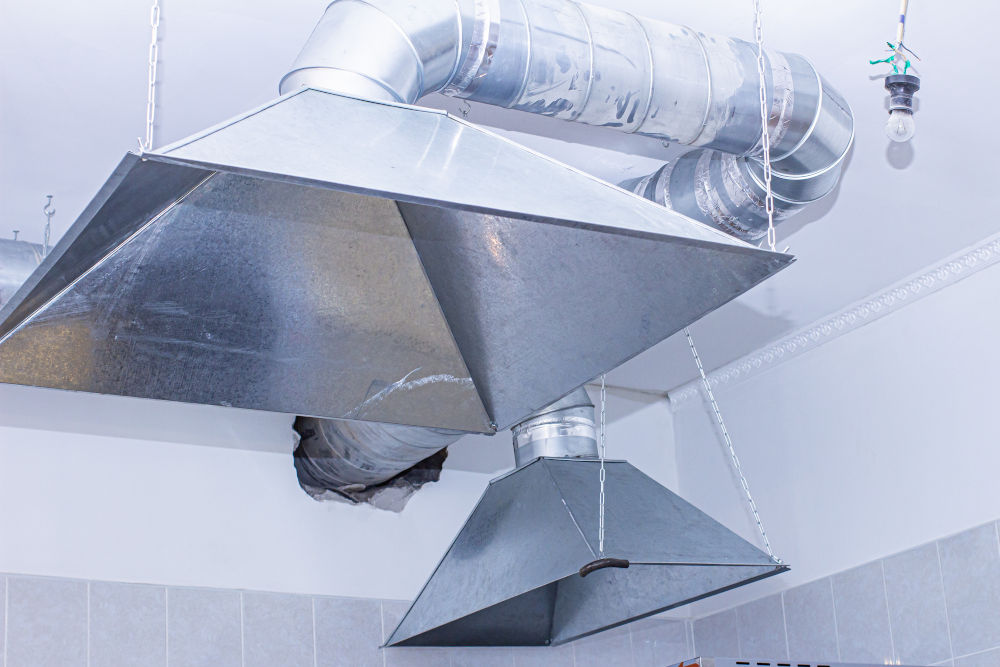
Each restaurant in a food court has its own hood, and each hood connects to a branch duct above the ceiling. In a shared system, the branches join a common trunk duct or vertical riser that runs to one exhaust fan on the roof. Some centres route the exhaust through pollution control units (PCUs) on the way. Others have several shared systems, each serving a group of tenants, or give every kitchen its own duct and fan.
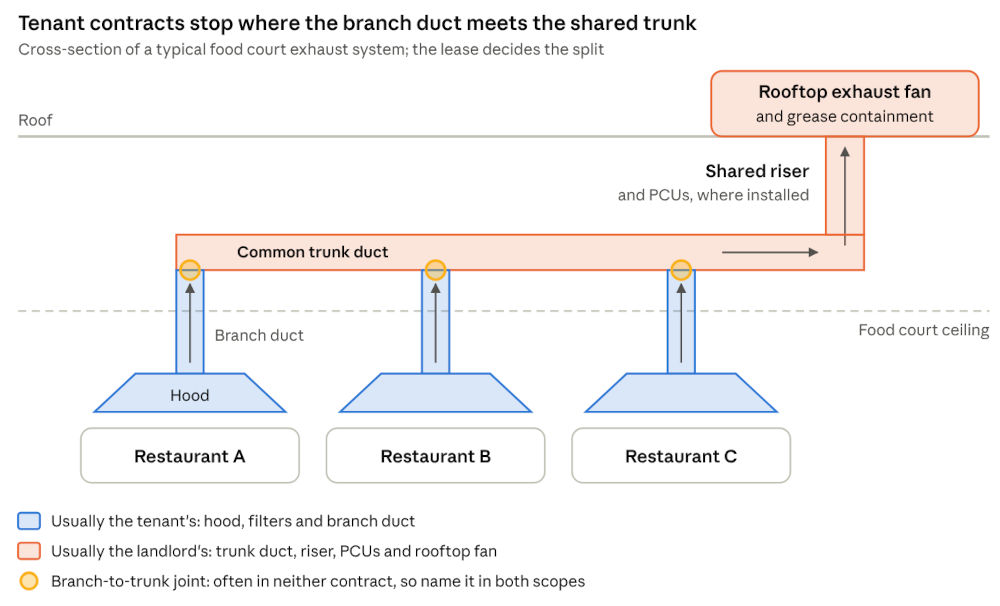
Each kitchen’s contract usually ends at its branch duct. The joints, the riser and the fan fall to the building unless the lease says otherwise.
In older buildings, restaurants change their cooking equipment, expand into the next unit or inherit ductwork from a previous tenant, and the drawings held by property management don’t always show it. Before a full-system cleaning is quoted, someone has to trace where each branch goes and which kitchens share each fan.
Who is responsible: tenant, landlord or property manager
The lease decides who arranges and pays for each part of the system, so start there, then check the tenant design criteria, building rules and any maintenance agreements already in place. The most common split gives the kitchen-side equipment to the tenant and the shared equipment to the landlord:
| Part of the system | Usually arranged by |
|---|---|
| Hood, grease filters and plenum | Restaurant tenant |
| Branch duct serving one kitchen | Restaurant tenant |
| Shared trunk duct or riser | Landlord or property management |
| Pollution control units, where installed | Landlord or property management |
| Rooftop exhaust fan and grease containment | Landlord or property management |
| Building access and coordinated shutdowns | Property management |
Some leases put the whole system on the tenants. Others make the landlord responsible for building-wide service and recover the cost through operating expenses.
NFPA 96 places responsibility for inspection, maintenance and cleaning on the owner of the system, unless that responsibility has been transferred in writing to a management company, tenant or another party. Ontario’s Fire Code requires the exhaust and fire protection systems of a cooking operation to be maintained in accordance with NFPA 96 (O. Reg. 213/07, Articles 2.6.1.12 and 2.6.1.13), and NFPA 96 sets how often they are inspected according to the type and volume of cooking.
The gap to look for is the section no lease names. A lease can make the tenant responsible for its hood and say nothing about the duct that runs above a common corridor to the riser.
Why tenant-by-tenant cleaning misses the common duct
When each restaurant hires its own contractor, each crew cleans the hood and branch duct it was hired for. The common riser sits outside every tenant’s premises, often behind a locked mechanical room or above a public corridor, and none of the contracts covers it. Property management ends up with a file of tenant reports and no record of when the shared duct was last cleaned.
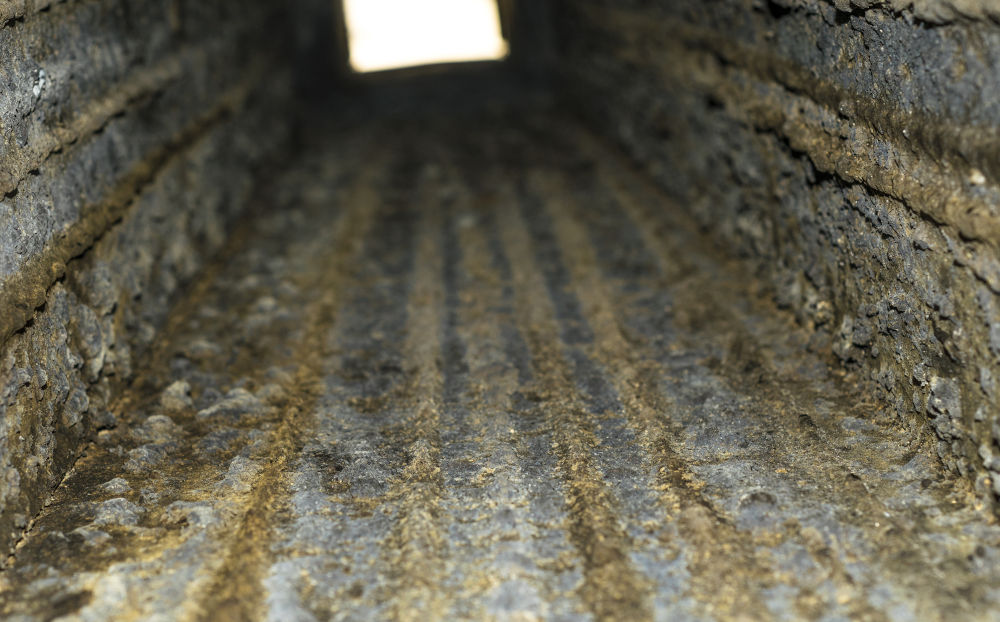
The common section also carries the exhaust of every connected kitchen, so a café’s light load and a charbroiler’s heavy one end up in the same duct. Grease inside exhaust ducts builds fastest at bends and changes of direction, which are also the hardest places to reach.
At Commerce Court in Toronto’s Financial District, several food service tenants feed one shared exhaust system, and the common section had been left long enough for grease to build up to a serious level before Pressure Kleen took the building on. The first restoration-level cleaning removed more than 1,600 pounds of it. Since then the system has been cleaned on a quarterly program written to the building’s own specification, and in more than ten years the build-up has not come back.
The rooftop fan often falls between contracts too. A mechanical contractor may service its motor and belts without removing any grease, while the tenants’ cleaners assume the roof is someone else’s job.
How a shared system is cleaned
The work starts with a survey. The contractor identifies every connected hood, branch duct, common section, access opening and rooftop fan, and checks the mechanical drawings against what is actually installed. The survey also shows which sections the existing access panels can’t reach, so that can be dealt with before the cleaning date.
On the night, the crew follows the exhaust path. Cooking equipment and nearby surfaces in each kitchen are covered, then the hoods, plenums and branch ducts are cleaned, followed by the risers, trunk ducts and bends of the common system. The rooftop fan and its grease containment are part of the same job. Anything the crew can’t reach goes into the report as a deficiency.
At Yorkdale Shopping Centre, Pressure Kleen has cleaned the food court’s shared exhaust on one quarterly program for 18 years. All 20 tenant kitchens feed shared pollution control units, so their branch ducts and the common ductwork are cleaned on the same visit, timed around mall hours rather than each restaurant’s own schedule. With one crew doing both, the joint between each branch and the common system falls within one scope.
Coordinating tenants, shutdowns and access
The common sections of a shared system can only be cleaned once every kitchen connected to them has stopped cooking. A counter that closes at 9 p.m. and a concession that stays open until midnight on the same riser set the window by the later of the two. A restaurant with its own street entrance that stays open after the mall closes can push it later still. Property management is usually the only party that can set one window for all of them.
Before the date, property management, the contractor and the tenants agree on:
- each tenant’s shutdown time and when cooking can resume
- entry to each leased kitchen, and who opens it
- loading dock, parking and service corridor access for the crew
- roof access, including any security escort the building requires
- locked rooms or storerooms that hold access panels
Inside each kitchen, the closing team still prepares its own line, from letting the equipment cool to clearing the area under the hood.
Records for a multi-tenant system
A tenant’s cleaning report shows what was done in one kitchen. Property management needs one record for the whole system, kept by the building rather than by the tenants, showing:
- which kitchens connect to which riser, trunk duct, PCU and fan
- the date each section was last cleaned, and by whom
- sections that couldn’t be reached, and what is needed to reach them
- deficiencies found, and whether they have been corrected
- the cleaning frequency set for the shared system
When one contractor cleans the whole system on one program, that record comes from a single source. Pressure Kleen’s Absolute Proof documentation gives property managers before-and-after photos, work orders, service reports and deficiency records for every visit, so the date the shared riser was last cleaned is in one file when a fire inspector or insurer asks. A report that lists only the hoods, with no photos of the common sections, is one of the signs a system isn’t being fully cleaned.
Frequently asked questions
Can each tenant keep its own exhaust cleaning contractor?
Usually, if the lease allows it. The weak point is the joint where each branch meets the trunk, which neither the tenant’s nor the landlord’s contractor may think of as theirs. Both scopes should name that connection, or one contractor should clean the branches and the common system together.
How often should a shared exhaust system be cleaned?
NFPA 96 sets inspection frequency by the type of cooking: monthly for solid fuel, quarterly for high-volume operations such as 24-hour, charbroiling or wok cooking, semi-annually for moderate volume and annually for low volume. On a shared system, the heaviest cooking connected to it sets the pace, and cleaning follows when inspection finds grease deposits.
Does servicing the pollution control units include the ductwork?
Not always. PCU servicing and duct cleaning are often separate contracts, much like fan maintenance and fan cleaning. Check whether your PCU contract covers the ducts around and between the units or only the units themselves.
What should happen when a food court unit changes tenants?
Have the branch duct inspected, and cleaned if needed, before the new tenant starts cooking, and update the system map. A new menu can change the load on the shared riser, and with it the frequency the whole system needs.
What if the shared duct runs above a store that isn’t a restaurant?
The crew may need to open ceiling panels or reach access openings from inside that unit. Property management arranges entry with that tenant before the cleaning date and agrees how its stock and fixtures will be protected.
Should property management collect the tenants’ cleaning reports?
Yes, where tenants clean their own branch ducts. A copy of each tenant’s report after every visit lets the building record show the whole system, not only the sections the landlord paid for.
Managing a food court or a building with shared kitchen exhaust? Pressure Kleen provides commercial kitchen hood and exhaust system cleaning for shopping centres and office towers across Ontario, from tenant branch ducts to shared risers, PCU ductwork and rooftop fans. Contact Pressure Kleen to arrange a site survey of your system.