A clean kitchen hood does not automatically mean the roof above it is protected.
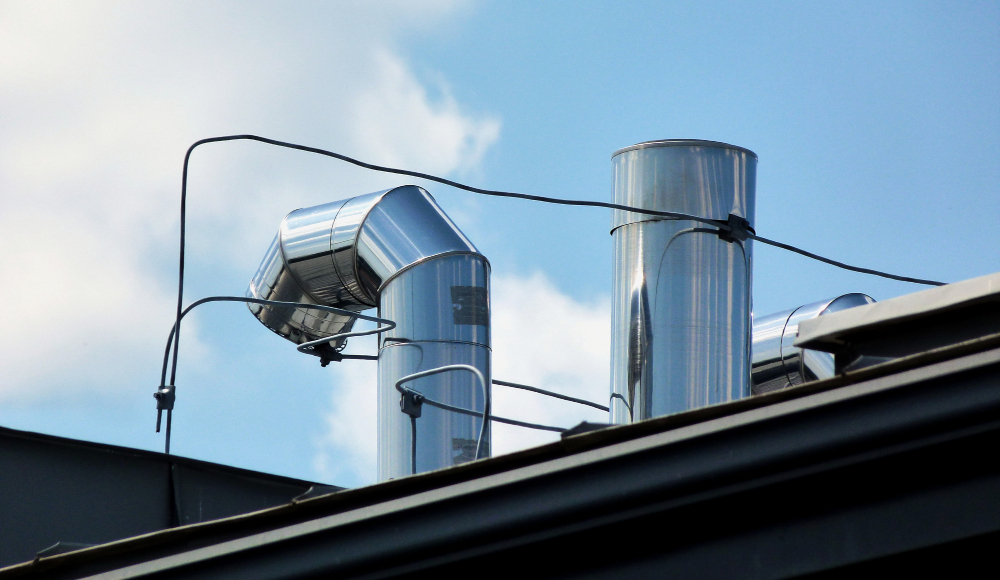
Grease can continue travelling through the exhaust system and reach the rooftop fan. From there, it may collect around the fan base, run across the roof membrane, settle near drains, or drip onto areas used by maintenance staff.
This is where rooftop grease containment becomes part of the maintenance picture. A suitable containment setup helps capture or control grease leaving the exhaust fan before it spreads across the roof.
It is not a replacement for exhaust cleaning. It does not remove grease from the hood, filters, ductwork, or fan. Its job begins at the point where the discharge reaches the roof.
Used alongside regular commercial kitchen exhaust cleaning, it can help restaurant operators and property managers avoid the repeated cycle of cleaning the kitchen system while leaving the rooftop mess untouched.
Key Takeaways
- Grease that reaches a rooftop fan can escape around the housing or discharge point.
- Once on the roof, it may stain membranes, create odours, attract debris, and leave slippery areas.
- Containment systems are intended to control runoff near the fan, not clean the exhaust system itself.
- The roof around the fan should be checked whenever the exhaust system is serviced.
- Grease pads, trays, drains, and other containment components need inspection and replacement.
- The condition of the roof, fan, curb, and surrounding surface should be viewed as part of one maintenance problem.
Why Rooftop Grease Problems Start Inside the Kitchen Exhaust System
The grease found around a rooftop fan began much lower in the building.
Cooking produces smoke, heat, vapour, and airborne grease. The hood captures part of that mixture and directs it toward the filters. The filters remove a portion of the grease, but they do not stop everything.
The remaining material continues into the ductwork and eventually reaches the fan.
How much reaches the roof depends on several things: the type and volume of cooking, filter condition, cleaning frequency, duct layout, fan performance, and the overall condition of the exhaust system.
A high-volume kitchen using fryers, grills, woks, or charbroilers will usually place more demand on the system than a light-duty operation. Poorly maintained filters may allow more residue to pass. Heavy deposits inside the duct can also add to the problem.
Regular commercial kitchen exhaust cleaning addresses grease inside the system. The hood, filters, accessible ductwork, and exhaust fan are cleaned according to the condition and use of the kitchen.
The roof still needs its own inspection.
If grease has already discharged around the fan, cleaning the duct does not remove it from the membrane, fan curb, roof drain, or neighbouring equipment.
How Grease Leaves Rooftop Exhaust Fans
Rooftop discharge is not always dramatic. There may be no obvious stream of grease running from the fan.
More often, the first signs are smaller:
- a dark ring around the fan base;
- sticky residue on the housing;
- staining that follows the roof slope;
- debris stuck to an oily patch;
- grease collecting near fasteners or seams;
- discolouration around the curb;
- residue inside or beside a roof drain.
The fan itself may throw small droplets beyond the immediate base. Wind can then carry residue farther across the roof. Rain may spread it again, particularly on low-slope roofing where water follows a shallow path toward drains.
Heat also changes the way grease behaves. Warm residue may move more easily, while cooler conditions can leave it thicker and harder to remove.
Over time, what began as a small area around the fan can become a recurring strip of staining across the roof.
This is why the discharge point matters. The fan may be the final component in the kitchen exhaust line, but it is also where the roof problem begins.
How Rooftop Grease Can Damage Commercial Roof Surfaces
Commercial roofing systems are not all the same, and grease does not affect every membrane in exactly the same way.
The concern is prolonged contact.
Grease sitting on a roof can hold dirt, soften some roofing materials, stain protective surfaces, and work its way toward seams, patches, flashings, or other vulnerable areas. Even where obvious deterioration has not occurred, the contamination can make roof inspections and repairs more difficult.
A roofer trying to assess a seam or flashing detail needs a reasonably clean surface. Adhesives and repair materials may not bond properly to a greasy area without thorough preparation. Foot traffic can also spread the residue beyond the original location.
The fan curb deserves attention as well. Grease may collect around its base, where the roof membrane meets the raised support beneath the fan. If the curb has damaged flashing, failed sealant, loose components, or an existing leak, heavy contamination can hide the condition.
It is important not to make a blanket claim that every grease stain has ruined the roof. Some marks are superficial. Others may be associated with genuine membrane deterioration.
Either way, recurring discharge should not be ignored.
Odour, Slip, and Maintenance Problems Linked to Rooftop Grease
Roof damage is only part of the issue.
Grease can leave a persistent food or rancid odour, particularly during warm weather. That smell may be noticeable near rooftop air intakes, upper-floor windows, patios, neighbouring units, or maintenance access points.
Sticky areas also collect dust, leaves, feathers, and windblown rubbish. A small greasy patch can quickly become a dirty mass around the fan.
Then there is access.
Roofing contractors, HVAC technicians, pest-control staff, exhaust cleaners, and building personnel may all need to walk near the fan. Grease underfoot can make the area slippery and can be transferred onto ladders, tools, access hatches, and cleaner sections of the roof.
The discharge may eventually reach a roof drain. Where that happens, the problem is no longer confined to the fan area. Grease mixed with dirt and debris may contribute to poor drainage or recurring blockage concerns.
Restaurant hood cleaning deals with an important fire-safety and system-maintenance need inside the exhaust pathway. Rooftop control deals with what happens after grease reaches the final discharge point.
Both matter, but they solve different parts of the problem.
What Rooftop Grease Containment Is Designed to Do
A rooftop grease containment system is installed near or around the exhaust fan to intercept discharge before it spreads across the roof.
The design varies by fan, roof layout, grease volume, and available space. Common setups may use replaceable absorbent media, collection trays, perimeter barriers, pads, or drainage components intended to hold oily residue.
A well-chosen system should do several things:
- cover the likely discharge area;
- remain secure around the fan;
- tolerate normal weather exposure;
- allow access for fan and duct cleaning;
- avoid interfering with drainage;
- make accumulated grease easier to inspect and remove.
The containment area should be large enough for the actual discharge pattern. A small pad placed beside one corner of the fan may do little if residue is being thrown in several directions.
Position also matters. Roof pitch, prevailing wind, fan orientation, and drainage paths can all affect where grease lands.
Containment is not simply a matter of putting absorbent material on the roof and forgetting about it. The setup needs to be selected, fitted, and maintained for the particular site.
What Grease Containment Does Not Replace
Rooftop containment does not clean the kitchen exhaust system.
It will not remove deposits from:
- the hood;
- filters;
- the plenum;
- ductwork;
- access panels;
- the fan interior;
- fan blades;
- grease channels or cups.
It also does not correct damaged equipment.
A leaking fan seal, loose housing, badly fitted hinge kit, damaged drain, or poorly maintained grease cup may continue to allow residue to escape. A containment system may limit the spread, but the equipment issue still needs attention.
Nor does containment replace roof cleaning. If grease has already moved beyond the collection area, the affected roof surface may require separate cleaning by a company familiar with both the contamination and the roofing material.
The strongest arrangement is coordinated maintenance: the exhaust system is cleaned, the fan is inspected, rooftop discharge is controlled, and the roof around the equipment is checked at the same time.
Rooftop Grease Issues Property Managers Should Watch For
A property manager does not need to dismantle the fan to notice that something is wrong.
During a roof walk or scheduled service, look for:
- dark or shiny residue around the exhaust fan;
- streaks moving away from the fan base;
- swollen, softened, or discoloured roofing material;
- grease around seams, patches, or flashing;
- dirty water marks leading toward drains;
- strong food or rancid odours;
- saturated containment pads;
- overflowing trays;
- loose or wind-damaged containment components;
- grease on nearby HVAC equipment;
- repeated complaints from roofers or technicians;
- a section of roof that becomes dirty again soon after cleaning.
Photographs help. A dated image taken after cleaning gives the facility team something to compare during the next inspection.
Recurring discharge should also be discussed with the kitchen operator. The cause may relate to cooking volume, filter practices, cleaning frequency, fan condition, or a containment system that is too small for the site.
Rooftop Grease Containment and Cleaning Table
| Rooftop Issue | Possible Cause | Why It Matters | Maintenance Response |
|---|---|---|---|
| Grease around the fan base | Fan discharge, failed grease collection, saturated pad | May spread onto membrane and curb flashing | Clean the area, inspect the fan, service containment |
| Staining down the roof slope | Rainwater carrying grease away from the fan | Extends contamination beyond the equipment area | Trace the runoff path and enlarge or reposition containment |
| Strong rooftop odour | Old grease, food residue, saturated absorbent material | May affect workers, neighbours, or nearby air intakes | Remove contaminated material and inspect discharge |
| Slippery roof surface | Fresh grease mixed with moisture | Creates difficult access for service personnel | Restrict the area and arrange suitable cleaning |
| Grease near a roof drain | Poor containment or heavy runoff | Can add to drainage and cleaning concerns | Clean the drain area and correct the containment setup |
| Saturated grease pad | High discharge or overdue replacement | Pad can no longer absorb additional residue | Replace the pad and review service frequency |
| Residue on fan housing | Dirty fan components or uncontrolled discharge | Signals broader exhaust maintenance needs | Include the fan in the next exhaust cleaning |
| Grease returning soon after cleaning | Active equipment or containment problem | Leads to repeated roof cleaning and complaints | Inspect the full exhaust pathway and fan assembly |
Why Rooftop Components Should Be Included in Exhaust Cleaning
The rooftop fan is part of the exhaust system, not a separate appliance that can be ignored once the interior ductwork is cleaned.
A complete service should consider the components that can be safely and properly accessed, including the fan housing, blades, grease collection points, hinge arrangement, and the area where discharge reaches the roof.
This does not mean the exhaust cleaner is responsible for repairing the roof or rebuilding damaged mechanical equipment. It means visible rooftop conditions should not be overlooked.
For example, the technician may notice that:
- a grease cup is missing;
- a drain line is blocked;
- the fan cannot be opened safely;
- containment material is saturated;
- residue has spread beyond the protected area;
- a curb or flashing detail appears damaged;
- the roof is too contaminated for safe access.
Those observations can be documented and passed to the restaurant operator or property manager.
That handoff is valuable. Rooftop grease problems often continue because each contractor sees only one part of the site. The hood cleaner sees the duct. The roofer sees the membrane. The HVAC contractor sees the fan. The property manager receives separate reports and has to work out how the pieces connect.
They usually connect at the rooftop discharge point.
How Pressure Kleen Helps Protect Rooftop Exhaust Areas
Pressure Kleen approaches rooftop grease as part of the full kitchen exhaust pathway.
The work may involve commercial kitchen exhaust cleaning, fan cleaning, review of visible discharge around the equipment, and attention to grease containment concerns. Where the roof has been affected, the condition can be documented so the restaurant operator or property manager knows what requires follow-up.
The cleaning plan depends on the kitchen and the site. A high-volume restaurant with heavy frying may need closer rooftop attention than a kitchen with lighter cooking. Multi-location operators may also benefit from consistent reporting so recurring problems can be compared across properties.
Pressure Kleen can work around operating hours and planned restaurant hood cleaning schedules to reduce disruption. Where saturated pads, uncontrolled runoff, damaged components, or heavy roof contamination are found, the issue can be identified rather than left hidden behind the fan.
The aim is not to present containment as a substitute for cleaning. It is to make sure the final part of the exhaust route receives the same practical attention as the hood and ductwork below.
Keep the Grease Problem from Moving onto the Roof
Kitchen grease does not cease to be a maintenance issue when it leaves the duct.
Once it reaches the fan, it can spread across the roof, collect dirt, create odours, interfere with access, and leave property managers dealing with repeated cleaning or roofing complaints.
Rooftop grease containment provides a controlled area for that discharge. To remain useful, it has to be inspected, emptied, cleaned, or replaced before it becomes saturated.
The exhaust system still needs regular cleaning. The fan still needs attention. The roof around the equipment still needs to be checked.
Pressure Kleen can help restaurant and commercial property operators coordinate rooftop grease containment with scheduled exhaust cleaning so the hood, duct, fan, and discharge area are treated as parts of the same working system.
Frequently Asked Questions
What is rooftop grease containment?
Rooftop grease containment is a system placed around or near a commercial kitchen exhaust fan to capture oily discharge before it spreads across the roof. It may use absorbent pads, trays, barriers, or other collection components.
Why does grease collect around rooftop exhaust fans?
Not all airborne grease is removed by kitchen filters. Some travel through the ductwork and reach the fan. It may then escape around the housing, drain points, fan base, or discharge area.
Can rooftop grease damage a commercial roof?
Prolonged grease exposure may stain roofing, hold debris, soften some materials, and make seams or repairs harder to inspect and service. The effect depends on the roof membrane, grease volume, exposure time, and existing roof condition.
Does grease containment replace kitchen exhaust cleaning?
No. Containment only manages discharge near the rooftop fan. Commercial kitchen exhaust cleaning is still required to remove grease from the hood, filters, ductwork, and fan.
How often should rooftop grease containment be checked?
It should be inspected during scheduled exhaust service and more often where cooking volume is high. Pads or collection materials should be replaced before they become saturated or begin allowing grease to escape.
What are the signs of a rooftop grease problem?
Common signs include oily residue around the fan, stained roofing, strong odours, saturated pads, grease near drains, dirty runoff paths, slippery surfaces, and contamination that quickly returns after cleaning.
Should restaurant hood cleaning include rooftop components?
The exhaust fan and accessible grease collection points should be considered as part of the exhaust system. The surrounding roof condition should also be observed so that active discharge or containment problems can be reported.
Who is responsible for cleaning grease from the roof?
Responsibility depends on the service agreement and the condition of the roof. Exhaust cleaners may clean the fan and immediate service area, while broader membrane cleaning or repairs may require coordination with a suitable exterior-cleaning provider or roofing contractor.
Can a property manager install any absorbent pad beneath the fan?
A basic pad may not cover the full discharge area or withstand wind, rain, and rooftop conditions. The containment method should suit the fan, roof surface, drainage pattern, and volume of grease produced.
How do rooftop grease containment and restaurant hood cleaning work together?
Restaurant hood cleaning removes grease from within the exhaust system. Rooftop containment helps catch residue that still reaches the discharge point between services. Used together, they provide better control than relying on either measure alone.