A fire-safety review is not only about whether a restaurant hood looks clean from the cook line. Inspectors, insurers, landlords, and facility teams may need evidence that the exhaust system has been maintained properly, that grease has been removed from areas beyond the visible canopy, and that service records are available.
That is where NFPA 96 comes in. NFPA 96 addresses the ventilation control and fire protection of commercial cooking operations, including inspection and maintenance of kitchen exhaust systems. For restaurant operators, good preparation means keeping the system clean, understanding where grease can accumulate, and maintaining clear documentation of completed service.
Key Takeaways
- NFPA 96 addresses commercial cooking ventilation and fire-protection systems, including inspection and maintenance requirements.
- A visibly clean hood does not confirm that ductwork, plenums, fan housings, or other hidden areas are free of grease.
- Inspection frequency should reflect the type and volume of cooking performed.
- Commercial hood cleaning should address accessible grease accumulation throughout the exhaust pathway, not only exposed stainless-steel surfaces.
- Before-and-after photographs and service reports create a useful maintenance record for inspections, insurance reviews, and facility audits.
- Trained kitchen exhaust technicians can identify access, cleaning, and maintenance issues that may otherwise go unnoticed.
What NFPA 96 Means for Restaurant Exhaust Systems
NFPA 96 is the National Fire Protection Association standard covering ventilation control and fire protection for commercial cooking operations. Its scope extends well beyond the hood itself. The standard addresses components such as grease removal devices, exhaust ducts, fans, cooking equipment, fire-extinguishing systems, and ongoing inspection and maintenance.
For a restaurant, that means treating exhaust maintenance as a fire-safety job for the whole system, not just the hood.
On Ontario, NFPA 96 is more than an industry guideline. The Ontario Fire Code (O. Reg. 213/07), Article 2.6.1.12, requires cooking operations that produce smoke or grease-laden vapours to have exhaust and fire-protection systems that meet NFPA 96, with some exceptions set out in the Code. That is what gives the standard legal weight for restaurants across the province.
Grease produced during cooking does not remain at the filter bank. Vapour and airborne particles can move into the plenum, ducts, fan assembly, and discharge area. If enough residue accumulates, those deposits create an additional combustible load within the exhaust pathway.
NFPA 96 therefore calls for the exhaust system to be inspected for grease buildup at intervals associated with the type and volume of cooking. Current NFPA materials list more frequent inspection for operations with heavier grease production, including monthly inspection for systems serving solid-fuel cooking and quarterly inspection for certain high-volume operations. Moderate-volume operations are listed on a semiannual inspection schedule, while qualifying low-volume systems are inspected annually.
These are inspection intervals, not a reason to assume every restaurant requires cleaning on exactly the same calendar schedule. Cleaning need depends on the condition found in the system and the applicable requirements for the site.
This article is general guidance, not a code ruling. Requirements can vary by building, equipment and municipality. Your local fire authority, meaning the fire department or fire prevention office that enforces the Fire Code where your restaurant operates, has final say on how they apply to your kitchen.
Why Visible Hood Cleaning Is Not Enough for Inspection Readiness
A restaurant may clean exposed hood surfaces every day and still have grease accumulating where staff cannot easily see it.
Behind the filters is the plenum. Beyond that are duct runs that may travel vertically, horizontally, or through several levels of a building before reaching the exhaust fan. Fan blades, housings, access areas, and rooftop components can also collect residue.
An inspector looks at the condition of the whole exhaust system, not at how clean the canopy looks.
Surface wiping can remove splashes and improve day-to-day hygiene, but it is not a substitute for professional commercial hood cleaning that reaches the accessible areas of the exhaust pathway.
The distinction is particularly important when a system contains long duct runs or difficult changes in direction. If proper access is unavailable, cleaners may not be able to inspect or clean every section effectively. That access issue itself may need to be documented and corrected.
Common Exhaust System Red Flags Inspectors May Notice
Many issues that cause concern during an inspection are visible before an inspector arrives.
Restaurant operators and facility managers should pay attention to signs such as:
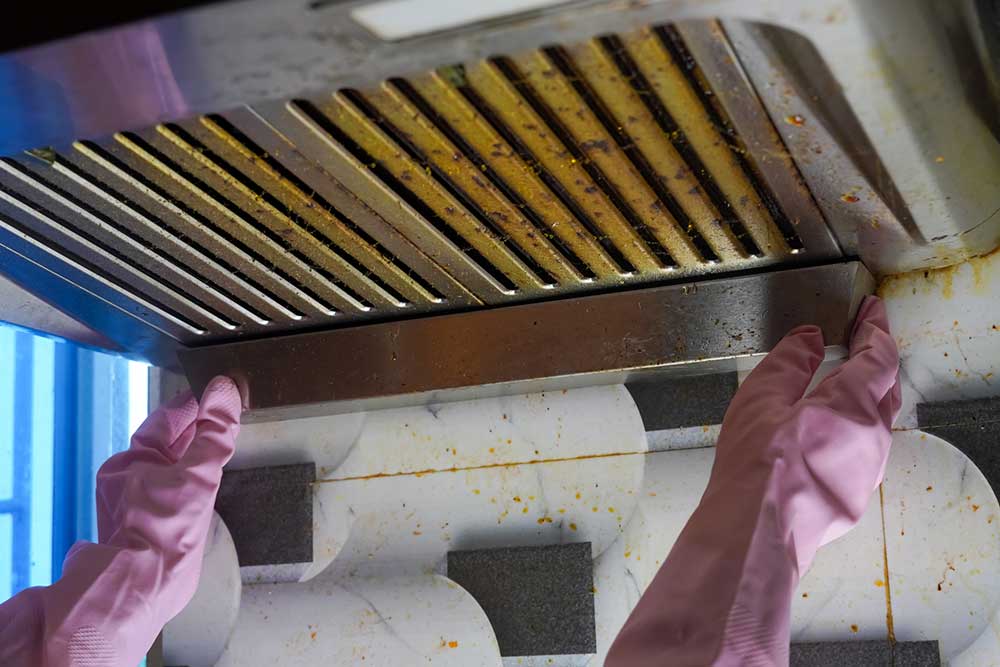
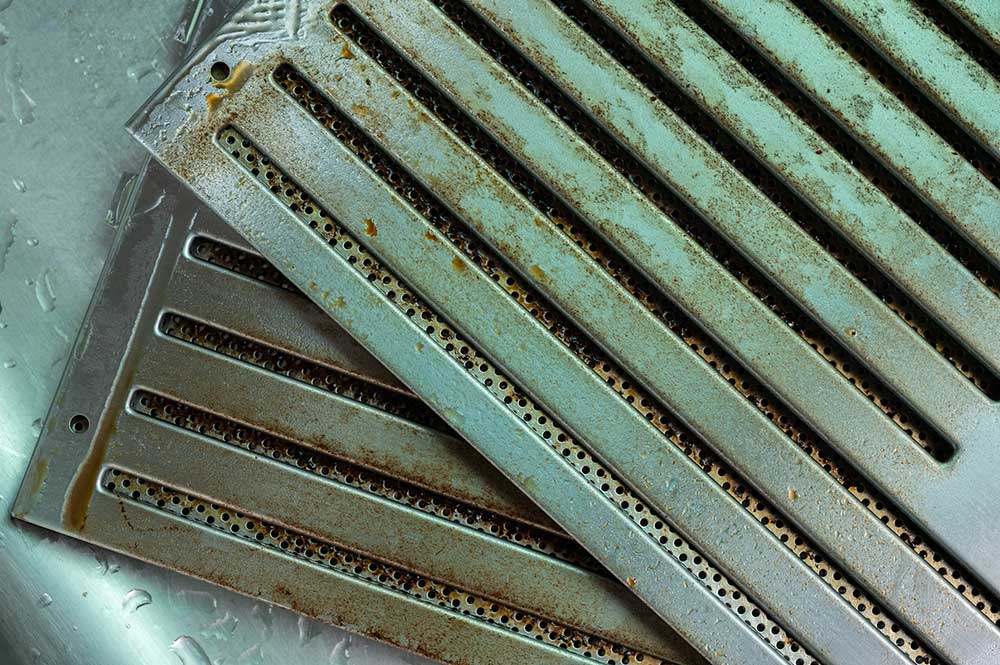
- heavy or sticky grease deposits around the hood or filters
- grease dripping from seams, edges, fan areas, or rooftop components
- filters that are damaged, heavily loaded, incorrectly fitted, or difficult to remove
- dirty or grease-coated access panels
- accessible duct sections with visible residue
- excessive grease around the fan housing or discharge area
- strong persistent grease odours
- missing, damaged, or inadequate access points
- obvious deficiencies in fan or duct components
- no clear record of recent exhaust inspection or cleaning
Not every visible issue automatically represents a code violation, and the authority having jurisdiction determines how applicable requirements are enforced. Still, these conditions are useful warning signs that the exhaust system deserves attention before an inspection or insurance review.
Cleaning Frequency Should Match Kitchen Use
One of the easiest mistakes is to treat exhaust cleaning as a fixed annual task for every restaurant.
A breakfast café using relatively light-duty equipment does not create the same exhaust load as a high-volume restaurant running fryers, charbroilers, and woks for extended hours. A kitchen using solid fuel introduces another set of operating conditions.
NFPA 96 reflects this difference through inspection frequencies tied to cooking activity. High-volume and grease-heavy operations are inspected more frequently than lower-volume kitchens.
Several factors should therefore influence the maintenance schedule:
- cooking volume
- operating hours
- menu and cooking methods
- use of fryers, charbroilers, woks, or solid fuel
- grease accumulation found during previous inspections
- exhaust system configuration
- requirements of the authority having jurisdiction
- insurer, landlord, or facility-management expectations
A better question for each kitchen is how quickly its system builds up grease, and what inspection and cleaning schedule suits that operation.
Why Service Reports and Before-and-After Photos Matter
Cleaning removes grease. Documentation shows what was done.
For an operator preparing for a fire-safety review, that distinction matters.
A service report can provide a dated record of the work completed, the equipment or system areas serviced, and any deficiencies identified during the visit. Before-and-after photographs add visual evidence of conditions before cleaning and the result afterward.
That record can be useful when information needs to be shared with:
- fire inspectors
- insurance representatives
- landlords
- property or facility managers
- franchise management
- internal health and safety teams
Documentation is especially useful for businesses operating several restaurants. Without a consistent reporting system, maintenance histories can become fragmented between locations, managers, contractors, and invoices.
Pressure Kleen’s Absolute Proof program includes digital before-and-after photographs, detailed service reports, deficiency reporting, and compliance documentation for kitchen exhaust service.
Hidden Grease Areas That Should Be Addressed Before Inspections
The most important grease deposits are not always the easiest ones to see.
A complete exhaust service may need to address the hood interior, filters, plenum, accessible grease ducts, access-panel areas, fan blades, fan housing, and rooftop grease-containment areas.
Pressure Kleen cleans the full exhaust pathway, from the commercial hood through horizontal and vertical grease ducts to exhaust fan components and rooftop areas.
These areas matter because grease can travel with the exhaust stream and settle at different points according to airflow, duct geometry, cooking volume, and system design.
For example, a clean filter bank does not establish that a horizontal duct section farther downstream is equally clean. Likewise, wiping the exterior of an exhaust fan does not show the condition of the fan blades or housing.
This is why inspection readiness requires looking beyond what can be seen from the kitchen floor.
How Trained Exhaust Technicians Support Inspection Readiness
Commercial exhaust cleaning is specialized work. A qualified provider needs to understand how to access the system safely, identify grease deposits, clean appropriate components, and recognize conditions that require further attention.
Pressure Kleen kitchen exhaust technicians hold the PECT (Professional Exhaust Cleaning Technician) designation from the International Kitchen Exhaust Cleaning Association. When technicians find damaged components, inadequate access, or conditions that need corrective action, they record them in a deficiency report.
Working with trained exhaust technicians does not guarantee that a restaurant will pass every inspection. Fire-safety reviews can cover many systems and requirements beyond exhaust cleanliness.
What experienced exhaust professionals can provide is narrower and more useful: proper attention to accessible grease-contaminated areas, informed identification of deficiencies, and a documented record of the service performed.
That helps restaurant operators approach an inspection with fewer unknowns.
How Pressure Kleen Helps Restaurants Prepare for Fire-Safety Reviews
Pressure Kleen provides commercial kitchen exhaust cleaning for restaurants, hotels, institutional kitchens, franchise operations, and other commercial facilities across Ontario.
The service covers the exhaust system from hood to rooftop and includes areas such as filters, grease ducts, exhaust fan components, and grease-containment areas. Where problems are identified, Pressure Kleen documents deficiencies and recommended corrective actions.
Its Absolute Proof program adds before-and-after photographs, service reports, and inspection-ready documentation to each service record. For restaurants with several locations, the same reporting format can also make maintenance records easier to review across the portfolio.
hat combination of cleaning and documentation is what makes regular exhaust service useful when preparing for an inspection. The objective is not to make a hood look presentable shortly before a visit. It is to maintain the exhaust system consistently and be able to demonstrate the work that has been performed.
Frequently Asked Questions
What is NFPA 96 hood cleaning?
The term generally refers to professional cleaning of commercial cooking exhaust systems in line with the inspection, maintenance, and grease-removal principles addressed by NFPA 96. The standard covers commercial cooking ventilation and fire-protection systems, including hoods, grease-removal devices, ducts, fans, and related equipment.
Do restaurants need proof of kitchen exhaust cleaning?
Documentation requirements can depend on the jurisdiction, insurer, landlord, or facility policy. In practice, dated service reports, photographs, and deficiency records provide useful evidence that exhaust maintenance has been completed and can be presented during inspections or reviews.
What documents should be kept after commercial hood cleaning?
Restaurants should retain the service report and any available before-and-after photographs, deficiency reports, corrective-action records, and related maintenance documentation. Keeping these records together makes the exhaust system’s service history easier to demonstrate.
What should a restaurant have ready before a fire inspection?
Keep the most recent exhaust cleaning report, dated before-and-after photos, any deficiency notes with what was done about them, and the service schedule for the system. Check that filters are in place and that access panels can be opened. If something flagged at the last cleaning is still unresolved, deal with it before the visit.
How often should a restaurant inspect its exhaust system?
NFPA 96 inspection frequency varies with cooking activity. Current NFPA materials specify monthly inspection for solid-fuel cooking systems, quarterly inspection for certain high-volume operations, semiannual inspection for moderate-volume operations, and annual inspection for qualifying low-volume operations. Local requirements and the authority having jurisdiction should also be considered.
What are common exhaust cleaning inspection red flags?
Examples include visible grease accumulation, grease drips, heavily loaded or damaged filters, dirty accessible ductwork, inadequate access, buildup around fan components, missing service records, and unresolved deficiencies identified during previous maintenance.