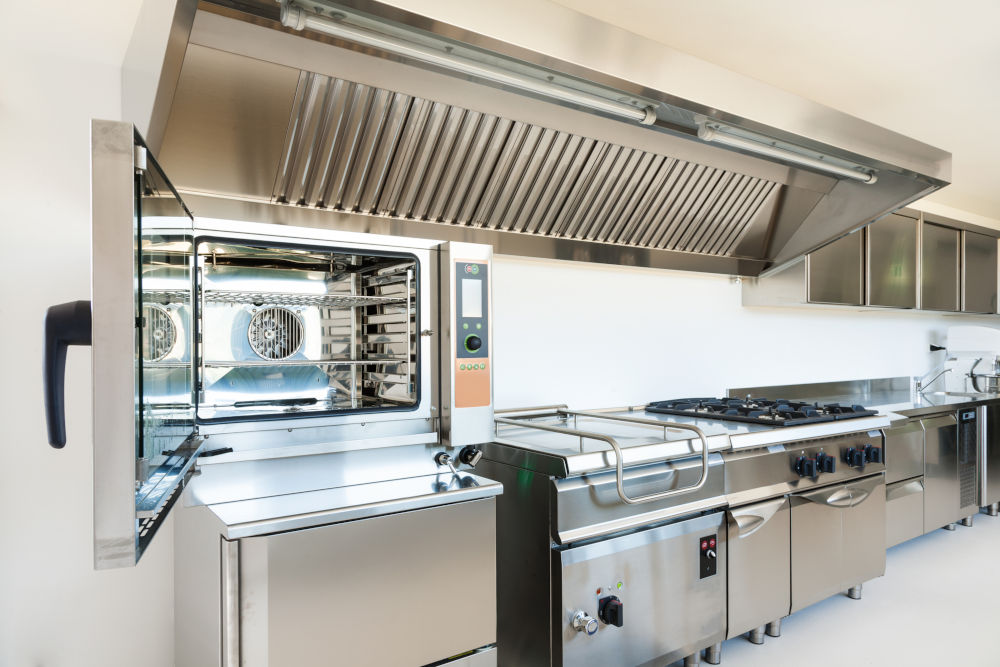
A restaurant can have a well-kept dining room, an orderly kitchen and a hood that looks reasonably clean, yet still have a maintenance problem above the cooking line.
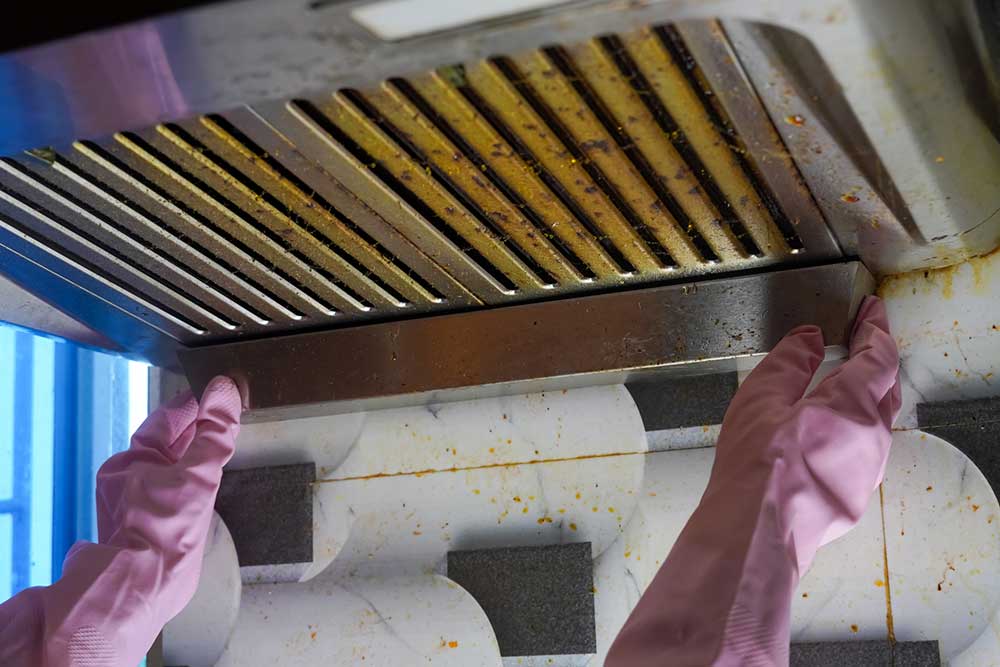
Grease produced during cooking does not remain on the surfaces staff can see. Some of it enters the exhaust system, where it can accumulate in filters, the plenum, grease ducts and the exhaust fan. Left there long enough, those deposits add combustible material to a system designed to carry heat, smoke and grease-laden vapours away from cooking equipment.
That is why kitchen exhaust cleaning is not simply a housekeeping task. For Ontario restaurant operators, exhaust-system maintenance is also part of meeting fire-safety requirements and being able to show that required maintenance has actually taken place.
Key Takeaways
- Grease accumulation inside an exhaust system is a fire-safety issue, not merely a cleanliness problem.
- Ontario’s Fire Code requires applicable commercial cooking exhaust and fire-protection systems to be maintained in accordance with NFPA 96.
- Cleaning needs are influenced by the cooking operation and grease load; one fixed schedule does not suit every restaurant.
- The condition of the entire exhaust path matters, including hidden ductwork and fan components.
- Service documentation helps operators establish what was cleaned and identify unresolved deficiencies.
- Repeatedly missed areas, poor access and inconsistent scheduling can undermine an otherwise organised maintenance programme.
How Grease Builds Up in Restaurant Exhaust Systems
Grease accumulation begins with ordinary cooking.
Fryers, griddles, ranges, charbroilers, woks and other equipment release airborne residue along with heat and moisture. The hood captures that rising plume and the exhaust fan draws it through the filters.
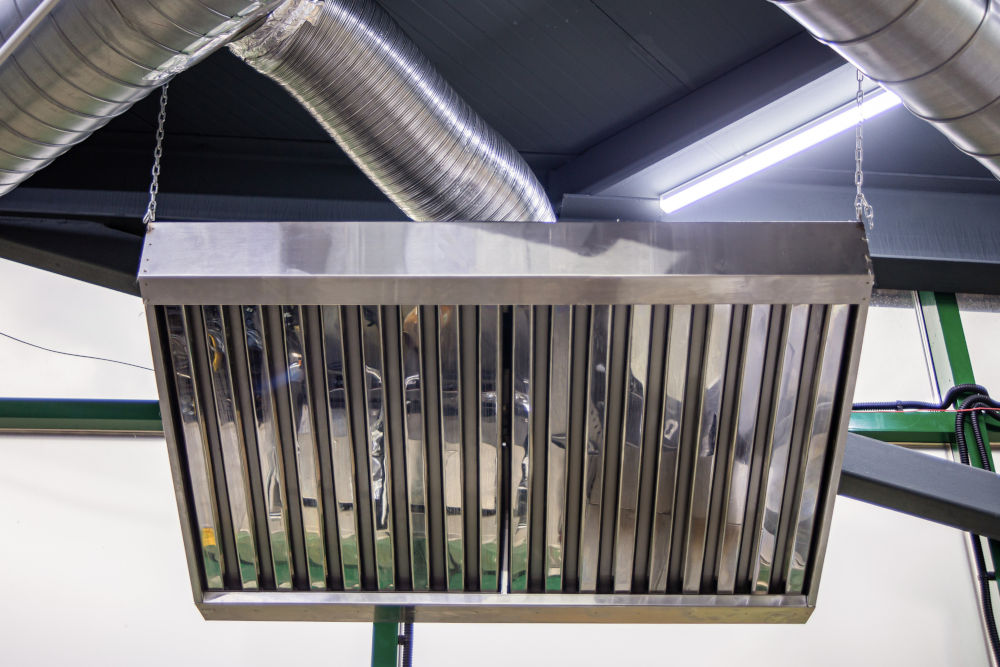
Filters remove a significant portion of the grease, but they are not intended to stop every fine particle or vapour. Some material continues into the plenum and ductwork. As the exhaust air moves farther from the hot cooking surface and begins to cool, residue settles onto metal surfaces.
Over time, a thin film can become a much heavier deposit.
How quickly this happens varies considerably. A restaurant running fryers and charbroilers through two busy services does not create the same grease load as a kitchen doing relatively light cooking for a few hours each day. Long duct runs, bends, airflow and equipment condition can affect where deposits form as well.
This is why commercial kitchen exhaust cleaning should be based on the actual operation rather than an arbitrary calendar reminder.
Why Grease Accumulation Creates a Fire Hazard
Grease inside an exhaust system matters for a straightforward reason: it can burn.
A flare-up can begin at the appliance level. Under the wrong conditions, heat or flame can enter the hood and continue into the exhaust route. If substantial grease deposits remain inside that route, the fire has additional combustible material available beyond the cooking surface.
The location makes the problem more serious. A grease duct may pass above ceilings, through shafts or across sections of a building that kitchen staff cannot readily access.
Removing accumulated grease reduces that available fuel.
It does not eliminate every possible cause of a commercial kitchen fire, and kitchen exhaust cleaning should never be presented as a substitute for maintaining cooking equipment, suppression systems or other required fire-safety measures. It addresses one particular and preventable condition: combustible residue accumulating inside the ventilation system.
What NFPA 96 Means for Restaurant Exhaust Cleaning in Ontario
NFPA 96 is the Standard for Ventilation Control and Fire Protection of Commercial Cooking Operations. It covers commercial cooking ventilation and associated fire-protection requirements, including inspection and maintenance of exhaust systems.
For Ontario operators, its relevance is direct.
Article 2.6.1.12 of the Ontario Fire Code requires cooking operations producing smoke or grease-laden vapours to have applicable exhaust and fire-protection systems in accordance with NFPA 96, subject to the exceptions contained in the Code. Article 2.6.1.13 requires those systems to be maintained in accordance with NFPA 96.
That does not mean a restaurant manager needs to become a fire-code specialist. It does mean exhaust cleaning should not be managed as an occasional cosmetic job.
A useful fire code compliant hood cleaning programme has to consider the condition of the system, whether grease is being allowed to accumulate, whether its important sections can be accessed and whether there is a reliable record of the work performed.
The local authority having jurisdiction remains the appropriate source for questions about how fire-code requirements apply to a particular property.
Cleaning Frequency Should Reflect What the Kitchen Actually Does
One of the easiest maintenance mistakes is putting every restaurant on the same exhaust-cleaning schedule.
Consider two kitchens.
The first operates a limited menu for a few daytime hours. The second runs late into the evening, uses several fryers and a charbroiler and handles a much higher cooking volume. Their exhaust systems are exposed to very different amounts of grease.
Their maintenance needs should reflect that difference.
Cooking volume is not the only consideration. The menu, type of equipment, operating hours, fuel source and rate at which deposits appear all matter. A change to the cooking line can change the picture as well. Adding a wok station, expanding fryer use or extending opening hours can increase exhaust-system loading even though the existing maintenance calendar has not changed.
The schedule therefore needs periodic review rather than being renewed automatically year after year.
Pressure Kleen’s current kitchen exhaust service takes the operation and grease production into account when recommending a cleaning schedule, rather than treating every commercial kitchen as identical.
Why Documentation Matters After Exhaust Cleaning
Once a service crew has left, much of the work becomes invisible again.
The filters go back into place. Access doors are closed. The rooftop fan returns to normal operation. A manager looking at the system the following morning may have no practical way to confirm what condition the duct was in before cleaning or which areas were reached.
That is where documentation becomes useful.
A meaningful commercial kitchen exhaust cleaning record can include before-and-after photographs, the scope of the work, service reports and notes describing deficiencies found during the job.
Suppose, for example, that a technician discovers a damaged access panel or a section of duct that cannot be reached properly. That is materially different from completing an uncomplicated cleaning where the full relevant system was accessible.
The record should make that difference clear.
Documentation can also help when restaurant management changes, a facility manager oversees several locations, an insurer asks about maintenance history or a fire inspector needs information about recent servicing. It turns maintenance from something remembered by whoever happened to be on shift into something the business can actually trace.
Common Compliance Problems Are Often Maintenance Problems
Not every fire-code concern begins with dramatic neglect.
Many develop from smaller issues that continue for too long.
An exhaust system may have been serviced, but a hard-to-reach duct section was repeatedly omitted. A rooftop fan may have accumulated grease while cleaning concentrated below it. Filters might be maintained frequently while the plenum behind them receives far less attention.
Scheduling can create another problem. A restaurant grows busier, but the old cleaning interval stays unchanged. Grease then accumulates faster than it is being removed.
Poor records create uncertainty of their own. If the only evidence available is an invoice labelled “hood cleaning,” a new manager may not know whether the ductwork and fan were included at all.
Typical issues worth investigating include:
- grease remaining in ducts, fan components or other connected exhaust areas;
- inaccessible duct sections with inadequate cleaning access;
- heavily loaded filters or filter housings;
- damaged or poorly functioning access doors;
- incomplete rooftop cleaning;
- service frequency that no longer matches cooking volume;
- missing photographs, reports or other maintenance records;
- deficiencies identified during previous work but never corrected.
The common thread is not simply dirt. It is a gap between the maintenance the system needs and the maintenance that can be demonstrated.
What a Proper Exhaust Cleaning Service Should Cover
A restaurant exhaust system should be approached as a connected route rather than a collection of unrelated surfaces.
Depending on the installation, a service assessment should consider:
| System area | Why it matters |
| Hood and canopy | First collection point for grease-laden cooking vapours |
| Filters and filter area | Captures grease but can also hide residue behind the filter bank |
| Plenum | Internal area that is not visible during normal kitchen use |
| Horizontal and vertical grease ducts | Carries exhaust through the building and can accumulate hidden deposits |
| Duct access doors | Determines whether internal sections can be inspected and cleaned |
| Exhaust fan | Final mechanical component in the exhaust path |
| Rooftop area | May show grease escaping or accumulating around the termination |
| Grease containment | Requires maintenance where containment equipment is installed |
| Service documentation | Records what was cleaned and what still requires attention |
A bright canopy is welcome, but it tells only a small part of that story.
This is also where Article 1 on missed exhaust cleaning areas becomes relevant: a system cannot be evaluated properly if significant sections are never reached.
How Pressure Kleen Helps Restaurants Stay Inspection-Ready
Pressure Kleen provides commercial kitchen hood and exhaust system cleaning for restaurants, institutional kitchens, franchise operators and other commercial facilities.
Its service covers the exhaust pathway from the hood through accessible grease ductwork to fan and rooftop components. Pressure Kleen also provides access-door installation and deficiency reporting where conditions uncovered during cleaning need further attention.
The technical side is supported by PECT-designated personnel through IKECA. Pressure Kleen has a long-standing relationship with the International Kitchen Exhaust Cleaning Association and provides more detail about its industry involvement on its associations and certifications page.
Just as important for an inspection-focused operator is what happens after the physical cleaning.
Pressure Kleen’s Absolute Proof® documentation programme provides before-and-after photographs, detailed service reports, deficiency reporting and related records. For a single restaurant, that provides a clearer maintenance history. For a multi-location operator, it makes it easier to see whether the same standard is being followed from one site to another.
Cleaning removes the grease. Good records establish what was actually done.
Frequently Asked Questions
How does grease buildup affect fire code compliance?
Grease accumulation can indicate that a commercial cooking exhaust system is not being maintained adequately. In Ontario, applicable exhaust and fire-protection systems must be maintained in accordance with NFPA 96. The specific compliance position of an individual restaurant should be confirmed with the relevant authority having jurisdiction.
What is fire code compliant hood cleaning?
The phrase generally refers to professional exhaust-system cleaning carried out with the applicable fire-safety requirements in mind. It should not mean wiping only the visible hood. The condition of grease ducts, fans, access areas and other connected components also matters.
Is hood cleaning enough for fire code compliance?
Cleaning the canopy alone does not establish the condition of the complete exhaust system. Grease can accumulate beyond the hood in the plenum, ductwork and fan, so these areas need to be considered as part of proper exhaust-system maintenance.
How often should a restaurant exhaust system be cleaned?
There is no sensible universal interval for every restaurant. Cooking volume, equipment, operating hours, fuel source and grease production influence maintenance needs. The condition of the system should also be assessed rather than relying only on a calendar.
What documentation should restaurants keep after cleaning?
Useful records include service reports, dates of work, before-and-after photographs, areas cleaned and any deficiencies or access problems identified. Multi-location operators may benefit from keeping these records in a consistent format across all sites.
Does NFPA 96 apply to Ontario restaurants?
Ontario’s Fire Code specifically references NFPA 96 for applicable cooking exhaust and fire-protection systems. Article 2.6.1.13 requires systems covered by Article 2.6.1.12 to be maintained in accordance with NFPA 96.
What parts of the exhaust system should be cleaned?
The scope depends on the installation, but it may include hood surfaces, filters and filter areas, the plenum, accessible horizontal and vertical grease ducts, exhaust fan components, rooftop areas and grease-containment equipment where present.
Compliance Is Easier to Manage Before an Inspection
A fire inspection is a poor time to start reconstructing when the exhaust system was last serviced, whether the ducts were included or what happened to a deficiency reported months earlier.
A better approach is routine and considerably less dramatic: match maintenance to the way the kitchen actually operates, address grease throughout the exhaust route, fix access problems when they are identified and keep records that show what took place.
That is the real relationship between grease accumulation, kitchen exhaust cleaning and fire-code readiness. It is not about making a hood look impressive for inspection day. It is about maintaining the system well enough that there is less to explain when inspection day arrives.