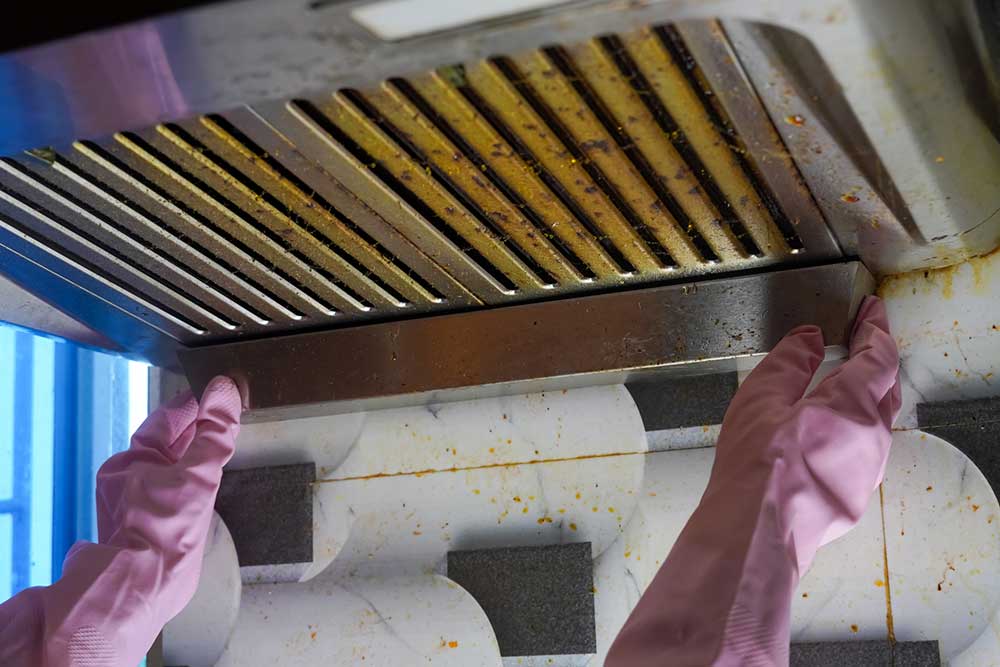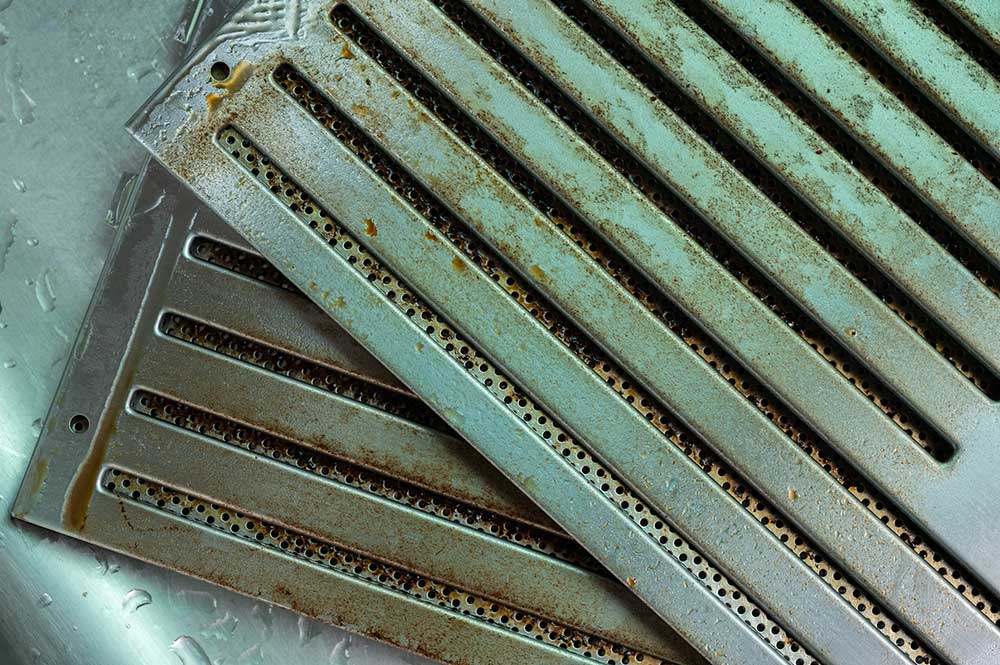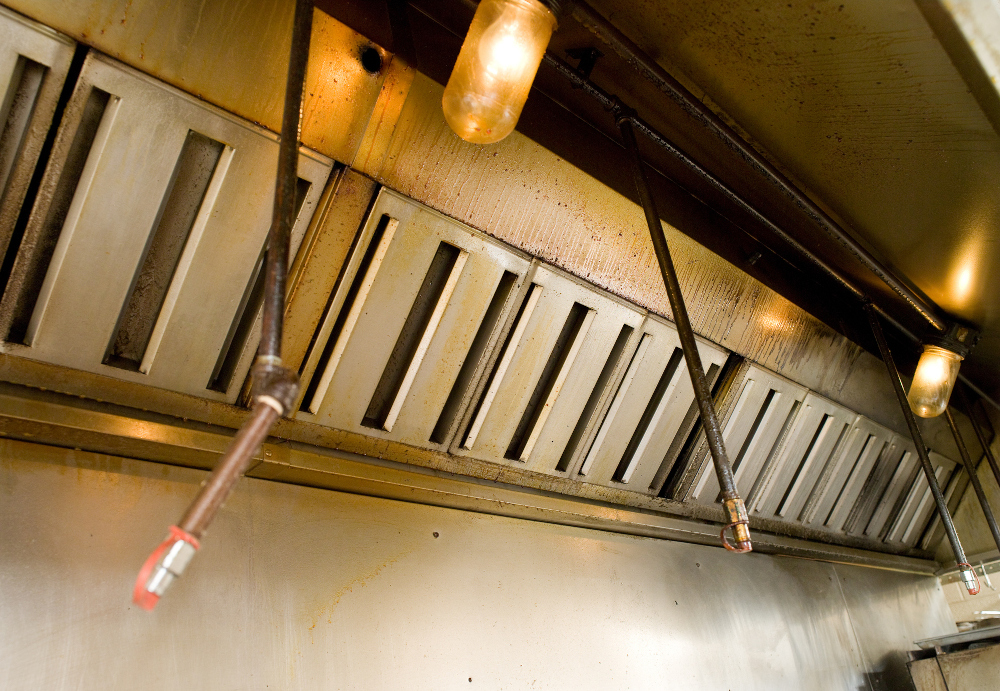
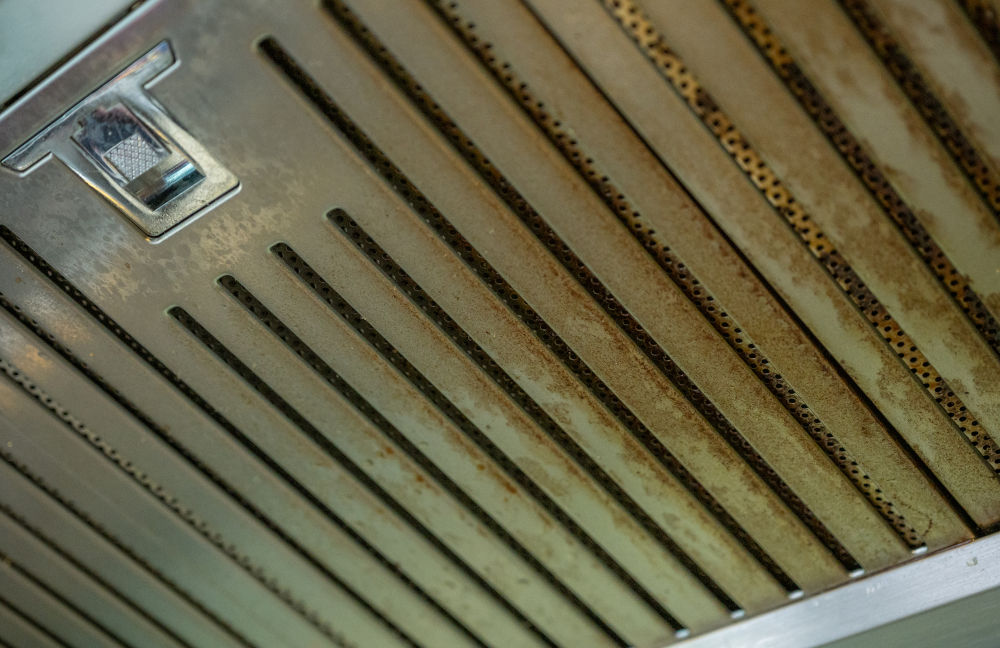
A restaurant hood can look clean from the kitchen floor and still leave a grease problem above the ceiling.
That surprises many operators. The filters have been washed. The stainless steel has been polished. The line looks ready for service. But grease does not stop just because the visible hood was wiped down. In a working kitchen, part of that grease travels upward with hot air, smoke, steam, and cooking vapour. Some of it passes through the filters, moves through the duct, reaches the fan, and eventually lands inside or around the rooftop exhaust unit.
That is where trouble often starts.
For restaurants, cafeterias, ghost kitchens, food courts, franchises, and shared commercial kitchens, commercial kitchen exhaust cleaning has to be viewed as a full-system job. The hood matters, of course. But the duct, fan bowl, fan blades, curb, hinges, discharge area, and nearby roof surface matter too. If those areas are ignored, grease is still sitting in the system. It has only moved out of sight.
Why Exhaust Cleaning Should Not Stop at the Hood
The hood is the part everyone sees, so it gets most of the attention. Kitchen staff pass it every day. Managers notice when filters look heavy. Inspectors look at the hood area first because it is accessible.
The rooftop fan is different. It may be reached only by ladder, hatch, or service stairs. In winter, rain, heat, or busy service periods, it may not be checked often. That gap is exactly why rooftop buildup can get ahead of the cleaning schedule.
During cooking, hot air pulls grease particles upward. Hood filters catch a portion of that grease, but not all of it. Fine vapour and residue continue into the plenum and ductwork. As the air travels away from the cooking line, it cools. Once it cools, grease becomes heavier and stickier. It begins to cling to metal.
By the time the air reaches the rooftop fan, residue can collect on fan blades, inside the housing, along the curb, and around the discharge area. A hood-only clean may improve what staff can see from below, but it does not deal with grease already sitting above the kitchen.
That is the real difference between basic restaurant hood cleaning and full exhaust system cleaning.
Key Takeaways
- Grease can move past the filters and travel through the exhaust system.
- Rooftop fans collect residue because hot grease vapour cools near the end of the exhaust pathway.
- The fan bowl, blades, hinges, curb, discharge area, and roof surface can all become contaminated.
- A clean hood does not prove the duct or fan is clean.
- Rooftop grease can create odour, fire risk, pest issues, slippery work areas, and roof damage.
- Rooftop grease containment helps protect the roof, but it is not a substitute for cleaning.
- Service reports should show whether the fan and rooftop areas were actually checked.
How Grease Travels From the Hood to the Rooftop Fan
The path is not complicated.
Grease starts at the cooking equipment. Fryers, flat tops, grills, charbroilers, ranges, and woks all release heat and airborne residue. The hood captures that plume and pulls it through the filters. From there, the air moves into the plenum, through the duct, and toward the exhaust fan.
Inside the duct, the air is no longer as hot as it was above the cooking surface. Moisture, smoke, and grease begin to separate. The heavier residue lands on interior surfaces. Some sections may stay relatively clean for a while. Others collect grease faster because of bends, low points, seams, or poor access.
The fan creates another collection point. Moving blades disturb the airflow. Grease can hit the inside of the fan bowl and spread unevenly across the housing. If the fan has not been opened and cleaned, residue can thicken into dark, sticky deposits.
That is why rooftop buildup is not random. It is part of the same grease trail that starts at the cooking line.
Where Rooftop Exhaust Fans Collect Grease
Rooftop fans collect grease in more places than most people expect.
| Area | What Usually Happens | Why It Matters |
|---|---|---|
| Fan blades | Grease sticks to the blade surface and edge | The fan can lose balance and work harder |
| Fan housing | Residue gathers inside the bowl | Grease can pool, harden, drip, or smell |
| Hinges and brackets | Grease builds around moving parts | Access becomes harder during service |
| Fan curb | Grease settles around the base | Leaks and roof staining often start here |
| Discharge side | Air throws residue outward | Nearby roof areas become contaminated |
| Roof membrane or grease pad | Stains, slick patches, or saturated pads appear | Roof protection and technician safety become concerns |
A rooftop fan may look normal from several feet away. The real condition often becomes clear only when the fan is opened, the underside is checked, and the area around the curb is inspected.
This is why photos matter. A vague service note saying “hood cleaned” does not tell an owner whether the rooftop fan was cleaned, whether grease was found near the curb, or whether containment pads were saturated.
Why Rooftop Grease Buildup Becomes a Safety Problem
Grease is not just dirt. It is a combustible residue.
If fire reaches the exhaust system, grease inside the duct or fan can help it move. The risk depends on the amount of buildup, the cooking type, the condition of the system, and the service history. But the basic point stays the same: the more grease left inside the system, the more concern there is.
There are also everyday issues that have nothing to do with a dramatic fire event.
Grease around a rooftop exhaust fan can make the roof slippery for technicians. It can create odours, especially in warm weather. It can attract insects, birds, and rodents. If grease sits on roofing material long enough, it may stain or damage the surface. In plazas, malls, and multi-tenant buildings, the smell or residue may become a building-management problem rather than only a kitchen problem.
For franchise operators and multi-location owners, rooftop grease can also create consistency issues. One location may have a detailed hood-to-roof service program, while another receives only a surface-level clean. From the dining room, both locations look fine. On the roof, the difference may be obvious.
Grease Containment Around Rooftop Exhaust Fans
Rooftop grease containment is meant to control grease after it leaves the fan area. Depending on the setup, it may include absorbent pads, grease trays, filters, boxes, or other containment systems placed around the exhaust unit.
Used properly, containment helps protect the roof. It can catch discharge before it spreads across the membrane, runs toward drains, or creates a slick patch near the fan. For busy kitchens, especially those using fryers or charbroilers, containment is often an important part of roof maintenance.
But containment has limits.
It does not clean the fan blades. It does not remove grease from the duct. It does not fix a fan that has not been opened in months. If pads are saturated or trays are neglected, the containment system can become another source of odour and mess.
So the right question is not “Do we have containment?” The better question is, “Is the containment being maintained, and is the fan still being cleaned?”
Both are needed.
Why Complete Exhaust Cleaning Includes Rooftop Components
A complete exhaust cleaning service follows the path grease actually takes.
That means the visible hood area is only one part of the work. Filters, hood interiors, plenums, duct access points, fan housing, blades, curbs, and grease-affected rooftop areas should all be reviewed where access allows.
The fan is especially important because it sits near the end of the system. If it is dirty, it can continue spreading residue around the roof even after the hood looks fresh. If the fan is not hinged or cannot be safely opened, that should be noted in the service report. Hidden problems do not disappear because access is inconvenient.
Restaurant owners do not need to become exhaust technicians, but they should ask better questions:
- Was the rooftop fan opened?
- Were the blades cleaned?
- Was grease found around the curb?
- Were containment pads replaced or checked?
- Were photos taken before and after?
- Were any areas inaccessible?
Those answers are much more useful than a sticker with a date and no detail.
Hood-to-Rooftop Grease Buildup: What to Check
| System Area | What to Watch For | Practical Note |
|---|---|---|
| Hood filters | Heavy residue, dripping, blocked airflow | Filters need regular in-house cleaning between professional service visits |
| Hood interior | Grease in seams, corners, and back ledges | A shiny front edge does not mean the whole hood is clean |
| Plenum | Grease behind the filters | This area is easy to miss during quick cleaning |
| Ductwork | Hidden buildup inside the exhaust path | Access panels make inspection and cleaning more reliable |
| Fan blades | Sticky coating or uneven buildup | Heavy residue can affect airflow and fan performance |
| Fan housing | Grease pooling inside the bowl | Often visible only after the fan is opened |
| Fan curb | Dark staining or grease around the base | May point to leaks, overflow, or poor containment |
| Roof surface | Slick areas, odour, stained pads | Rooftop grease containment may need service or replacement |
| Service records | No photos, vague notes, missing rooftop details | Documentation should show what was actually cleaned |
For high-volume kitchens, this check should not be treated as a once-a-year formality. Grease load changes with menu, hours, equipment, season, and staff habits.
Signs Rooftop Exhaust Fans Need Attention
A manager may never climb onto the roof, but the kitchen and building often give clues.
There may be a stronger cooking smell outside the building. Smoke may linger longer than usual in the kitchen. Staff may notice the hood pulling poorly during rush periods. Building maintenance may report staining around the fan or slippery patches on the roof. In some cases, grease may drip near the fan curb or appear on roof pads sooner than expected.
Noise can be another clue. A fan that vibrates, rattles, or sounds strained may have mechanical issues, grease imbalance, or both. Cleaning will not solve every fan problem, but grease-heavy blades should not be ignored.
Pest activity is also worth noting. Birds, insects, and rodents are drawn to food residue. A greasy rooftop discharge area can become part of that attraction.
When these signs appear, the issue should be looked at as an exhaust-system problem, not just a cleaning complaint.
How Pressure Kleen Supports Complete Exhaust System Cleaning
Pressure Kleen approaches exhaust cleaning as a hood-to-rooftop service, not a cosmetic wipe-down of the visible kitchen area.
A proper visit should account for the hood, filters, accessible duct sections, fan housing, fan blades, rooftop discharge area, and grease containment where applicable. The exact work depends on access, system design, buildup level, and safety conditions, but the goal is the same: remove grease from the places where it actually collects.
For restaurant operators, this matters because the risk is rarely in one obvious spot. It is usually spread across the system. A little behind the filters. More inside the duct. Heavy residue in the fan bowl. Staining on the roof pad. None of these details tells the whole story alone, but together they show how the system is performing.
Cleaning frequency should be based on actual use. A light bakery, a breakfast café, a burger restaurant, and a charbroiler-heavy kitchen do not create the same grease load. The schedule should reflect the menu, equipment, hours, and inspection history.
Rooftop grease is easy to miss because it is not in the normal line of sight. Yet it is part of the same exhaust path that begins above the stove, fryer, grill, or charbroiler.
When hot vapour leaves the hood, some grease keeps moving. It travels through the duct, cools, sticks to metal, gathers inside the fan, and can spread around the rooftop unit. Left alone, that buildup can affect fire safety, odour control, roof condition, pest activity, technician access, and fan performance.
That is why commercial kitchen exhaust cleaning should not stop at the hood. The system needs to be checked from the kitchen to the roof, with clear documentation of what was cleaned and what still needs attention.
A clean hood is good. A clean exhaust path is better.
FAQs
Do rooftop exhaust fans collect grease?
Yes. Rooftop exhaust fans collect grease because airborne cooking residue travels through the hood, filters, ductwork, and fan. As the vapour cools near the rooftop unit, grease settles on the blades, housing, curb, and nearby roof surface.
Is rooftop fan cleaning included in restaurant hood cleaning?
It should be included in a complete exhaust cleaning service. Some basic restaurant hood cleaning jobs focus mainly on the visible hood area, so owners should confirm whether the fan, duct access points, and rooftop areas are included.
What is rooftop grease containment?
Rooftop grease containment is a system used to catch or control grease discharge around rooftop exhaust fans. It may include pads, trays, filters, or containment boxes. It protects the roof, but it does not replace fan and duct cleaning.
Can grease around a rooftop fan damage the roof?
Yes. Grease can stain roofing material, soften some surfaces, create slippery work areas, and cause odour problems. The longer it sits, the harder it is to manage.
How often should rooftop exhaust fans be cleaned?
It depends on cooking volume and equipment. Kitchens with fryers, charbroilers, woks, or long operating hours usually need more frequent service than low-volume kitchens. The best schedule is based on inspection and actual grease buildup.
Why does grease still appear on the roof after hood cleaning?
Usually because the fan, curb, duct, or rooftop containment area was not fully serviced. Grease may also appear if containment pads are saturated, missing, or poorly placed.
Does commercial kitchen exhaust cleaning include the fan?
A full commercial kitchen exhaust cleaning service should include accessible fan components, including the housing and blades. If the fan cannot be safely accessed or opened, that should be clearly documented.