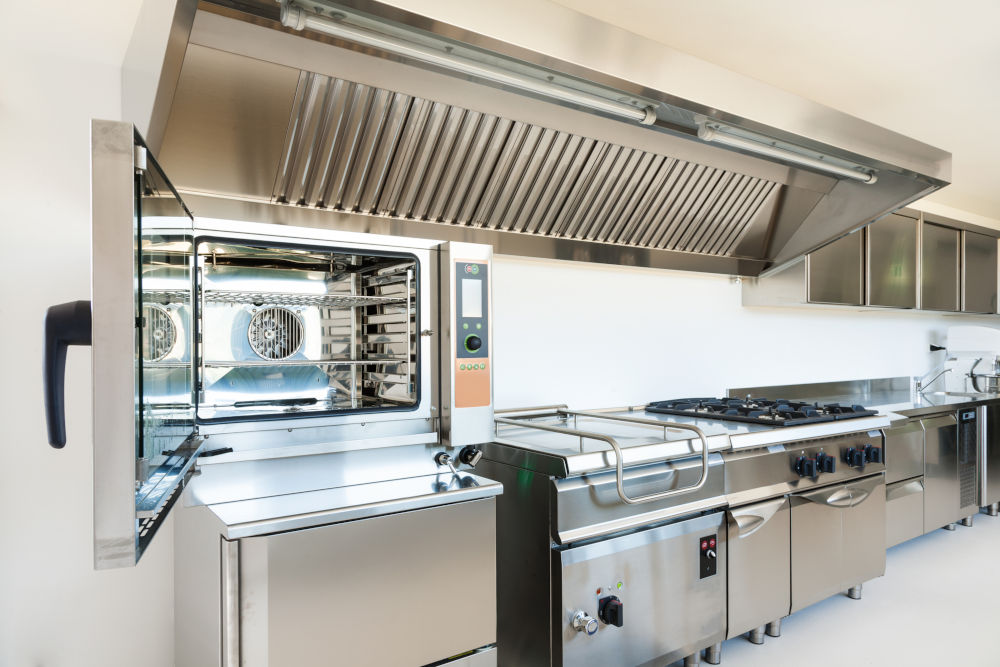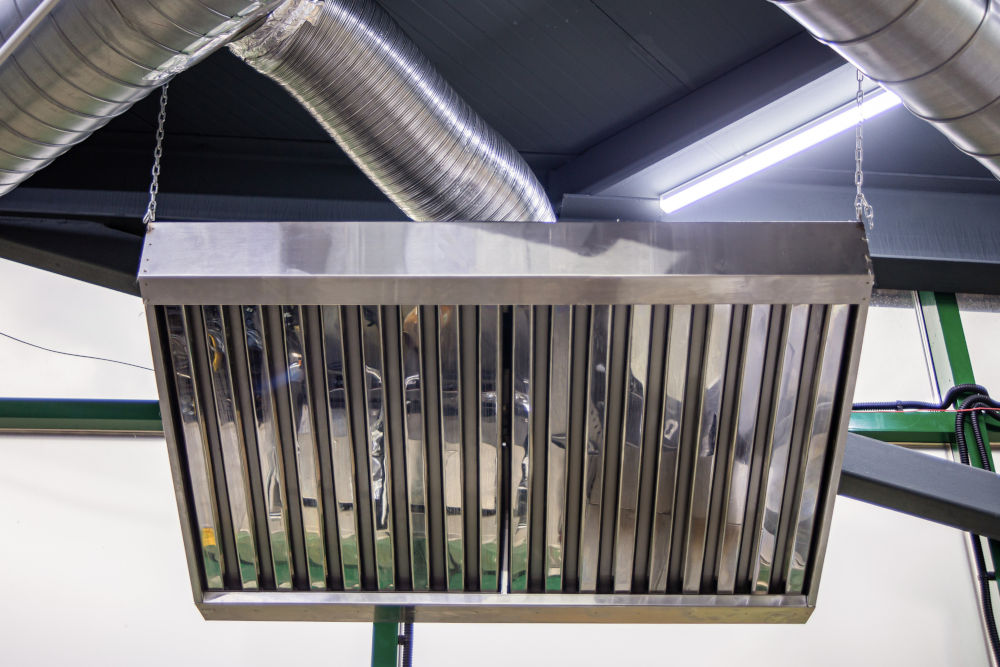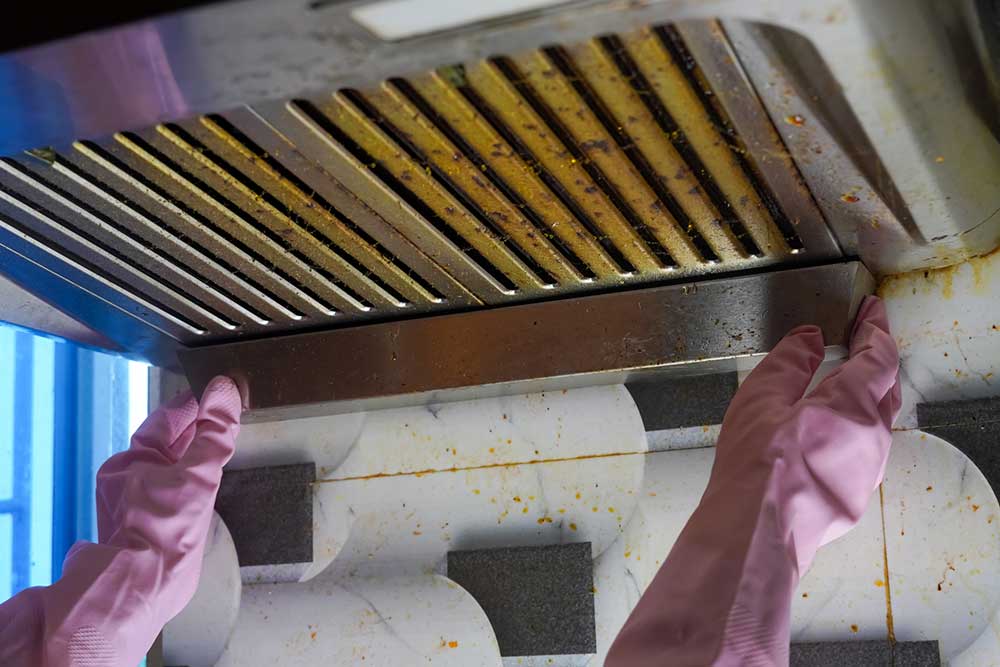
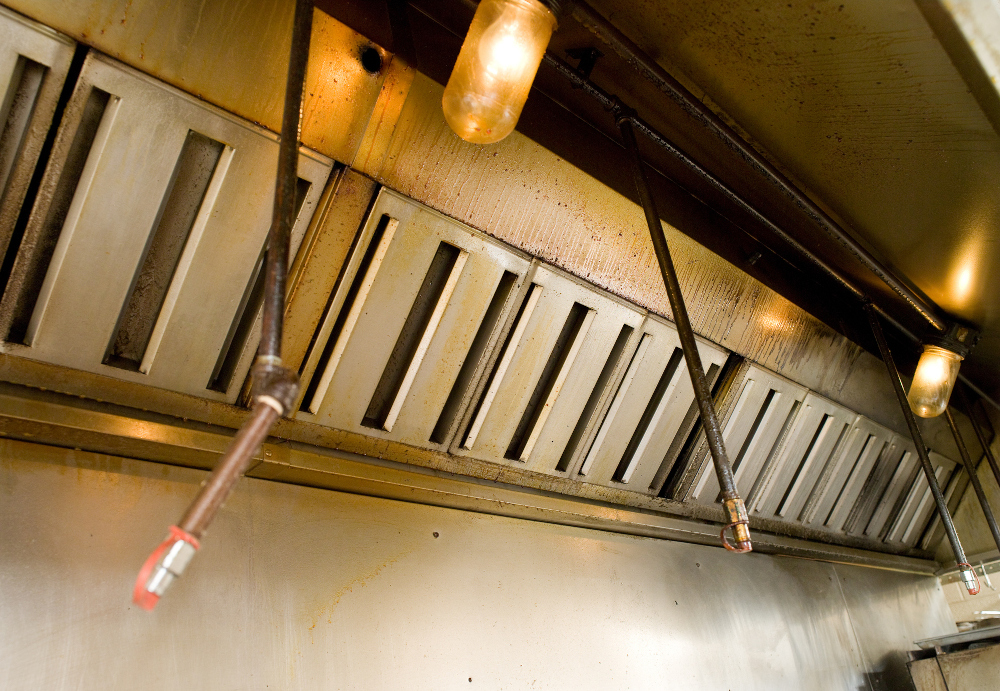
A stainless-steel hood can look spotless while grease remains farther inside the exhaust system.
That distinction matters. The visible hood is only the starting point of a route that may continue through filters, a plenum, horizontal and vertical ducts, access panels, a rooftop fan, and grease-handling components above the building. Cooking vapour moves through all of it.
Wiping or degreasing the exposed hood improves the kitchen’s appearance. It does not show what is sitting inside the duct, behind the filters, around the fan blades, or beneath the rooftop equipment.
Proper kitchen exhaust cleaning follows the grease through the system rather than stopping where customers and kitchen staff can see.
Key Takeaways
- Hood cleaning and full exhaust-system cleaning are not the same service.
- Grease can pass through filters and collect in the plenum, ductwork, fan, and rooftop discharge area.
- Hidden deposits may affect fire risk, airflow, odour, fan performance, and maintenance access.
- A complete service should be based on the system layout and cooking load, not only on the condition of the visible canopy.
- Cleaning frequency varies between restaurants because equipment, fuel, menu, volume, and operating hours differ.
- Before hiring a contractor, restaurant operators should confirm what will be opened, cleaned, inspected, and documented.
What Restaurant Hood Cleaning Usually Covers
The phrase restaurant hood cleaning is used loosely.
Sometimes it refers to wiping the stainless-steel canopy, backsplash, and other exposed surfaces above the cooking line. In other cases, the service includes degreasing the filters and cleaning the immediately accessible section behind them.
That work has value. Kitchen surfaces collect grease quickly, and a dirty canopy gives the cooking area a neglected appearance. Filters also need regular attention so they do not become heavily loaded.
The problem is one of scope.
A visually clean hood tells you very little about the condition of the duct ten feet above it. It does not confirm that the fan blades are free of deposits or that rooftop grease is being controlled. Even the space directly above the filters may be difficult to judge without opening and inspecting the system.
This is why the service description matters more than the label used on an invoice.
“Clean hood” and “clean exhaust system” are not interchangeable instructions.
What Full Kitchen Exhaust System Cleaning Includes
A full service looks at the connected exhaust pathway, which may include:
- the hood canopy and exposed interior surfaces;
- grease filters;
- the plenum behind or above the filters;
- horizontal and vertical duct sections;
- accessible turns and transitions;
- installed access panels;
- fan blades and fan housing;
- grease cups, drains, or collection points;
- rooftop discharge and nearby containment components.
Not every restaurant has the same layout. A short, straight duct serving a small cooking line is a different job from a multi-storey route with several turns, limited access, and heavy solid-fuel cooking.
The technician first needs to understand where the system runs and how its internal surfaces can be reached. Access panels are particularly important on long ducts and around changes in direction. Without suitable access, there may be areas that cannot be properly inspected or cleaned from the hood opening or rooftop fan alone.
Complete commercial kitchen exhaust cleaning is therefore not just a larger version of wiping the canopy. It involves opening the system where possible, working through its components, and confirming what was actually reached.
How Grease Moves Beyond the Visible Hood
Cooking produces more than smoke.
Heat lifts moisture, vapour, combustion products, and fine grease particles from the equipment below. The hood captures that rising plume and pulls it toward the filters.
Filters remove a substantial amount of grease, but they are not an absolute barrier. Smaller particles and vapour can continue into the plenum and ductwork. As the air travels and cools, some of that material settles onto internal surfaces.
The location of the deposits is not always obvious.
Grease may collect shortly above the hood, along a horizontal run, at an elbow, around a duct seam, or near the fan. The pattern depends on airflow, temperature, duct design, cooking activity, and the condition of the filters and fan.
A restaurant using fryers, charbroilers, woks, or solid-fuel appliances may produce a very different deposit pattern from a kitchen doing lighter-volume cooking. Long operating hours also change how quickly buildup develops.
Cleaning only the visible hood deals with residue at the point of capture. It leaves the remainder of the route unverified.
Hidden Grease Buildup and Fire Safety Risk
Grease deposits inside a commercial exhaust system are combustible.
The concern is not that every dirty duct is moments away from a fire. The concern is that cooking equipment already produces heat and flame, and an exhaust route coated with residue provides additional fuel if ignition reaches it.
A flare-up may begin at the cooking line and enter the hood. From there, fire can spread into filters, the plenum, ductwork, and fan assembly. Deposits hidden inside the system are difficult for restaurant staff to see and impossible to assess through surface cleaning alone.
Heavy buildup can also make emergency response and later cleanup more complicated. A duct may pass through ceiling spaces, service shafts, or sections of the building that are not readily accessible from the kitchen.
That is why applicable fire-safety requirements focus on the exhaust system as a connected assembly rather than treating the visible canopy as the full job.
The practical point for a restaurant operator is simple: a polished hood is not evidence that combustible deposits have been removed from the duct.
How Incomplete Cleaning Can Affect Airflow and Odour
Not every exhaust problem presents as an obvious breakdown.
The kitchen may first notice that smoke hangs in the room longer than it used to. The area near the cooking line feels hotter. Odours linger after service. The fan sounds different, or staff begin opening doors because the hood does not seem to pull as effectively.
Several faults can cause those symptoms, including make-up air problems, fan defects, poor system design, damaged belts, blocked filters, or changes to the cooking equipment. Grease buildup may be one part of the diagnosis.
Deposits can narrow passages, disturb airflow, and add weight to fan components. Grease on fan blades may also affect balance and efficiency. A loaded filter can restrict movement before the air even enters the duct.
Odour often travels with the same problem. Old grease inside a warm exhaust system can produce a stale or rancid smell. Rooftop discharge may affect nearby windows, patios, neighbouring units, or outdoor air intakes.
Cleaning cannot correct every ventilation fault, but the system is harder to assess properly while its components are coated in residue.
Why NFPA 96 Expectations Focus on the Exhaust System
Commercial kitchen fire-safety guidance does not stop at the hood’s visible edge.
The exhaust arrangement includes the hood, filters, ducts, fans, and related components that carry grease-laden vapour away from the cooking line. Inspection and cleaning need to reflect the system’s actual use and condition.
The precise service interval is not identical for every restaurant. A high-volume operation, a 24-hour kitchen, and a solid-fuel cooking line may need more frequent attention than a low-volume seasonal business.
What matters here is the scope: cleaning should address the accessible grease-contaminated parts of the exhaust route rather than only the stainless steel that can be seen from the floor.
Restaurant operators should retain service records and before-and-after documentation. Those records can help with internal maintenance, landlord communication, insurance questions, and follow-up when a contractor reports limited access or damaged components.
Documentation should not be treated as proof by itself. It needs to correspond to work that was actually completed.
Hood Cleaning Only vs. Full Exhaust System Cleaning
| Service Area | Hood Cleaning Only | Full Kitchen Exhaust System Cleaning | Why It Matters |
|---|---|---|---|
| Visible canopy | Usually included | Included | Removes surface grease and improves kitchen appearance |
| Backsplash and exposed stainless steel | Often included | May be included within the agreed scope | Supports day-to-day cleanliness |
| Grease filters | Sometimes washed | Cleaned and assessed as part of the exhaust route | Loaded filters may restrict airflow and allow more residue to travel |
| Plenum | Often omitted | Accessed and cleaned where possible | Grease commonly collects out of sight behind the filters |
| Ductwork | Not normally included | Cleaned through available openings and access panels | Hidden deposits remain even when the hood looks clean |
| Rooftop fan | Usually omitted | Fan blades and housing are addressed where accessible | The fan is part of the exhaust pathway |
| Rooftop grease area | Not included | Visible discharge and containment issues can be checked | Escaped grease may affect the roof and maintenance access |
| Documentation | May cover surface work only | Should identify system scope, access limits, and completed work | Helps operators understand what was and was not cleaned |
A contractor’s terminology may differ, so the restaurant should confirm the scope before work begins.
Why Restaurants Should Schedule Cleaning Based on Use and Grease Load
A calendar alone does not tell you how dirty a kitchen exhaust system is.
Two restaurants may operate for the same number of months and produce completely different levels of buildup. The menu, cooking temperature, fuel, equipment, volume, and operating hours all influence grease production.
A busy charbroiler can load a system differently from a bakery oven. Frying throughout a long service day creates a different maintenance demand from reheating prepared meals. Solid-fuel cooking brings its own deposit and inspection concerns.
Previous service findings are useful. If a system repeatedly shows heavy buildup at the end of its cleaning interval, waiting the same length of time again makes little sense. If deposits remain light and the cooking operation has not changed, the schedule may be reviewed with the appropriate professionals.
Restaurant operators should also reassess cleaning frequency after:
- adding new cooking equipment;
- extending opening hours;
- changing the menu;
- increasing production;
- converting to another fuel or cooking method;
- receiving reports of heavy grease during service;
- noticing recurring smoke or odour complaints.
The aim is to base the schedule on what the kitchen produces, not on a generic interval copied from another property.
What to Ask Before Hiring a Kitchen Exhaust Cleaning Provider
A low quote may describe a much smaller job than the restaurant expects.
Before booking, ask the contractor to explain the system boundaries in plain language. The discussion should cover more than “the hood.”
Useful questions include:
- Will the filters and plenum be cleaned?
- Which duct sections can be accessed?
- Are existing access panels sufficient?
- Will the rooftop fan be opened and cleaned?
- How will electrical and mechanical components be protected?
- Is the fan fitted with safe access or a suitable hinge arrangement?
- Will rooftop grease containment be inspected?
- What happens if an inaccessible section is found?
- Are before-and-after photographs provided?
- Will the report identify damaged, missing, or unsafe components?
- How is the kitchen protected during cleaning?
- What preparation is required from restaurant staff?
- Is the quoted work completed by trained employees or subcontractors?
The answers should be specific to the property.
A promise to make the hood “look like new” does not explain how the duct will be reached.
Access Is Part of the Job
Some systems cannot be cleaned properly without suitable openings.
A technician may be able to reach a short section from the hood and another section from the fan, but a long horizontal run or tight elbow can remain inaccessible between those points.
Access panels allow internal inspection and cleaning at strategic locations. They should be appropriate for the duct and installed without creating new leakage or safety problems.
Where access is inadequate, the contractor should document the limitation rather than imply that the entire route was cleaned. The restaurant or property manager can then arrange the necessary corrective work with the appropriate trade.
This is one of the clearest differences between appearance-based hood washing and full-system maintenance. The former works on what is easy to reach. The latter asks whether all relevant sections can actually be reached.
How Pressure Kleen Provides Full-System Exhaust Cleaning Support
Pressure Kleen approaches the job from the cooking line to the rooftop discharge point.
The service scope can include the hood, filters, plenum, accessible ductwork, fan components, and visible rooftop grease concerns. Before work begins, the system layout, access, cooking load, operating schedule, and condition of the equipment need to be considered.
Restaurants remain active workplaces, so preparation and timing matter. Cooking equipment and surrounding areas must be protected. Service may need to take place overnight or outside normal kitchen hours. Access to the roof, locked mechanical areas, alarms, and building contacts should be arranged in advance.
During the work, hidden grease, damaged components, restricted access, saturated rooftop containment, or other maintenance concerns may become visible. Pressure Kleen can document those findings so the restaurant operator, facility manager, roofer, HVAC contractor, or landlord knows what requires follow-up.
That does not turn exhaust cleaning into mechanical repair or roof work. It prevents visible warning signs from disappearing into an incomplete service report.
A Clean Hood Is Only the Beginning
The hood is the part of the exhaust system that people see every day. It is also the easiest part to mistake for the whole system.
Grease does not stay on the stainless steel. It passes through filters, settles in hidden spaces, reaches the ductwork, coats fan components, and may eventually escape onto the roof.
Full kitchen exhaust cleaning follows that path. It addresses the connected components, identifies access limitations, and leaves the restaurant with a clearer record of the system’s condition.
Pressure Kleen provides commercial kitchen exhaust cleaning for restaurants and other food-service operations that need more than a surface-level hood wash. The work can be planned around kitchen hours and documented from the visible canopy through the accessible duct and rooftop equipment.
Frequently Asked Questions
What is the difference between hood cleaning and kitchen exhaust cleaning?
Hood cleaning may refer only to the visible canopy, filters, and exposed stainless-steel surfaces. Kitchen exhaust cleaning covers the broader route, including the plenum, accessible ductwork, rooftop fan, and related grease-handling components.
Does restaurant hood cleaning include the ductwork?
Not always. The term is used differently between companies. Restaurant operators should confirm in writing whether the quote includes internal duct cleaning, access panels, the fan, and rooftop components.
Why does grease build up beyond the hood?
Filters capture much of the airborne grease, but they do not stop all vapour and fine particles. Remaining residue travels with the exhaust air and settles inside the plenum, ducts, and fan.
How can hidden grease affect airflow?
Heavy deposits, loaded filters, and dirty fan components may restrict or disturb air movement. However, poor airflow can have several causes, so the ventilation system may also require mechanical assessment.
Why is grease buildup a fire concern?
Grease deposits are combustible. If flame or intense heat enters the exhaust pathway, buildup inside the hood, ductwork, or fan can provide fuel and allow the incident to spread beyond the cooking line.
How often should a restaurant’s exhaust system be cleaned?
Frequency depends on cooking volume, operating hours, appliance type, fuel, menu, and previous inspection findings. High-volume and grease-heavy operations generally require closer monitoring and more frequent service.
Does full kitchen exhaust cleaning include the rooftop fan?
It should include accessible fan components within the agreed service scope. Operators should confirm whether the blades, housing, grease collection points, and surrounding discharge area will be addressed.
What should restaurants look for in an exhaust-cleaning company?
Look for clear system-wide scope, trained technicians, safe access procedures, protection of kitchen equipment, before-and-after documentation, and honest reporting of inaccessible or damaged sections.
Is wiping the hood between professional services still necessary?
Yes. Day-to-day hood, filter, and cooking-area care supports kitchen hygiene and performance. It does not replace scheduled professional cleaning of the hidden exhaust pathway.
Can exhaust cleaning correct a poorly performing ventilation system?
Cleaning may improve conditions when grease is affecting filters, ducts, or fan components. It cannot repair failed motors, damaged belts, inadequate make-up air, poor system design, or other mechanical faults.