Some parts of a commercial property can go weeks without much attention. The main entrance is rarely one of them.
Every customer, employee, tenant, courier and contractor crosses roughly the same few metres of pavement. Mud arrives on shoes. Gum gets pressed into concrete. Coffee is spilled near the door. Food-service tenants add another source of grease and residue. In an Ontario winter, pedestrians bring salt and slush from the parking lot and sidewalk.
The result is predictable: the entrance often looks worn long before the rest of the exterior does.
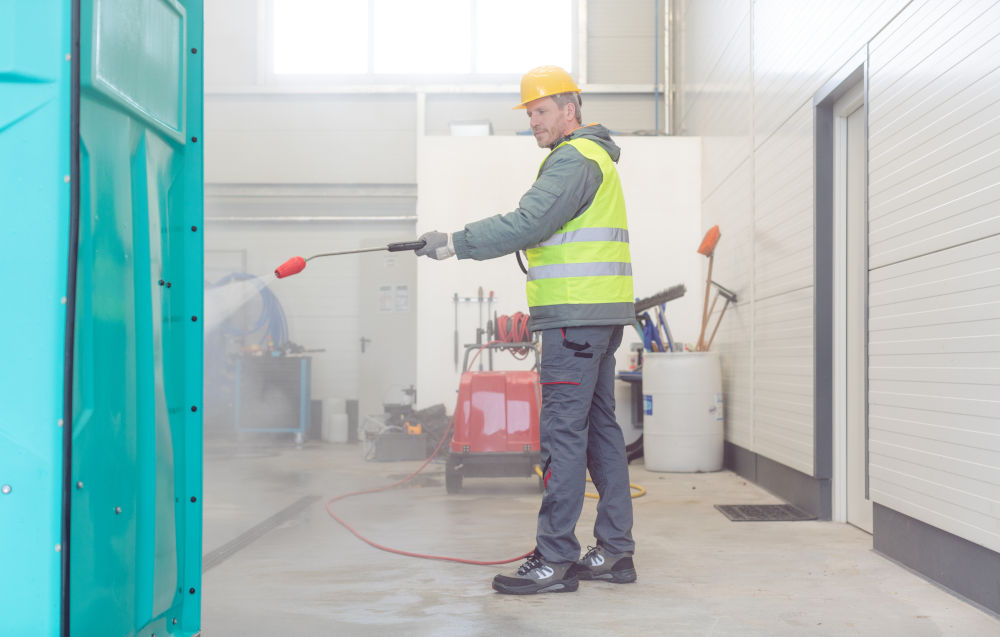
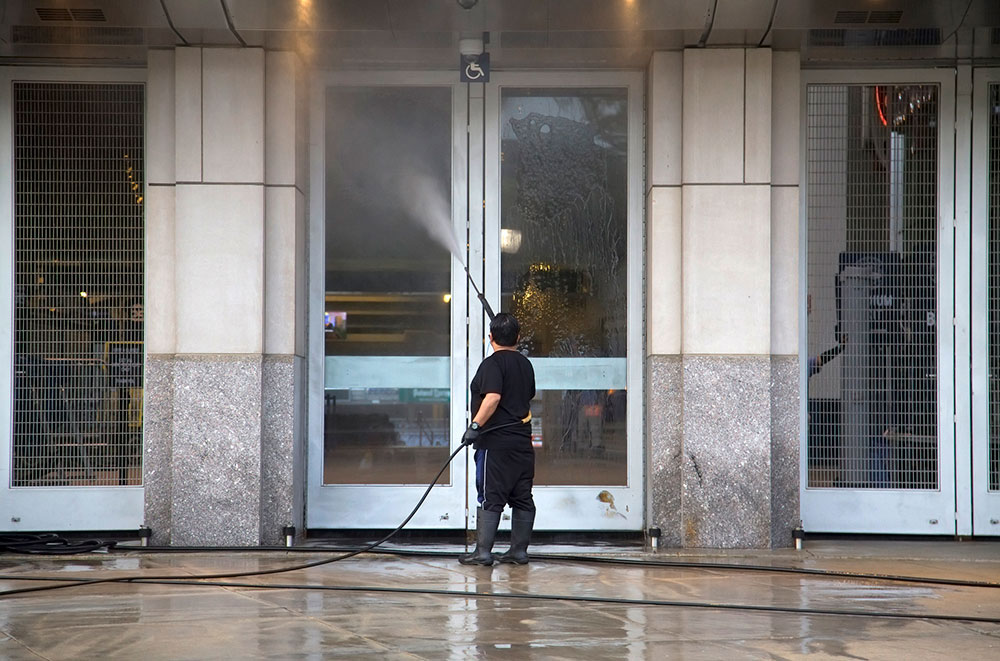
For busy properties, commercial pressure washing works best as planned maintenance for these high-use areas rather than as an occasional response once staining has become difficult to ignore.
Key Takeaways
- Commercial entrances collect more dirt simply because more people pass over them.
- Gum, grease, spills, mud, salt residue and organic growth can all become concentrated around doors and main pedestrian routes.
- Clean walking surfaces support good property maintenance, but pressure washing does not correct hazards such as broken pavement, ice, poor drainage or uneven concrete.
- High-traffic zones may need attention more frequently than quieter areas of the same property.
- Entrance cleaning can be planned around opening hours, deliveries and customer traffic rather than interrupting normal operations.
- A good maintenance plan prioritizes the areas that become dirty fastest instead of treating every exterior surface on the property the same way.
What Actually Builds Up Around a Busy Commercial Entrance?
A heavily used entrance rarely has one single cleaning problem.
Most have layers of different material arriving from different directions.
Pedestrians bring fine dirt and road residue from parking areas. During wet weather, that material is pressed into concrete or interlocking stone rather than remaining loose enough to sweep away. Winter adds dried salt residue and gritty slush.
Then there are the things produced by the businesses themselves.
A restaurant entrance may collect dropped food, grease and drink spills. A retail storefront can develop dark foot-traffic patterns and gum spots. Office and condominium entrances often show dirt around thresholds and along the route between the parking area and lobby. Around shopping plazas, the busiest pavement may be the strip immediately outside the doors rather than the larger sidewalk beyond it.
Other common buildup includes:
- chewing gum;
- greasy or oily marks;
- drink and food spills;
- mud and compacted soil;
- road salt residue;
- dirt around mats and thresholds;
- bird droppings;
- algae or organic film in shaded, damp areas;
- grime around curbs, ramps and planter edges.
Some of this can be dealt with through day-to-day sweeping or spot cleaning. Material that has been repeatedly walked over, driven into a porous surface or left through several weather cycles is another matter.
That is where professional pressure washing services become more useful.
Entrance Cleanliness Shapes the First Few Seconds of a Visit
Property presentation is sometimes discussed as though it were purely cosmetic. At an entrance, it is more practical than that.
People make their first close-up observation of a building while approaching the door.
They may never examine an upper-storey façade or the far side of a parking structure, but they will notice the pavement beneath their feet, the curb they step over and the condition immediately around the entrance.
For a restaurant, that area becomes part of the customer experience before the guest reaches the host stand. For a retail plaza, the shared walkway affects every tenant facing it. In a condominium or office building, it is one of the few exterior spaces used by almost everybody who enters.
That does not mean every old stain needs to be chased indefinitely or that pressure washing will make aged paving look new. The objective of commercial exterior cleaning is more realistic: remove the dirt and removable buildup that make a maintained property look neglected.
What About Slips and Safer Walking Surfaces?
This part deserves careful wording because cleaning is only one element of walkway safety.
Ontario’s guidance on preventing slips, trips and falls in the workplace identifies oily or greasy surfaces, spills, snow and ice, debris and other surface conditions as potential hazards. It also identifies prompt spill cleanup, routine cleaning and removal of debris, snow and ice among the possible control measures.
Pressure washing can help remove surface contamination such as grease, algae, mud and built-up dirt. It cannot repair a cracked slab, improve inadequate drainage, remove an elevation change or prevent freezing weather.
That distinction matters.
A property manager should not assume that a pressure-washed walkway is automatically a safe walkway. Once the residue is removed, the underlying surface still needs to be assessed as part of normal property maintenance.
In fact, cleaning can make that assessment easier. A crack, damaged joint or recurring pooling area is easier to see when it is not hidden under months of dirt.
Why Routine Cleaning Often Works Better Than Waiting for a Major Cleanup
There is a point at which entrance cleaning changes from maintenance into recovery.
A few fresh gum spots are one job. Dozens that have been flattened into the walkway over months are another. Light seasonal grime is different from dark traffic lanes that have been allowed to build through several seasons.
The same principle applies to restaurant grease, staining around garbage routes and grime beside busy storefronts. The longer material remains on a surface and is exposed to traffic and weather, the more stubborn the overall condition can become.
A scheduled programme also lets property managers separate areas by need.
A main entrance may deserve regular attention during active months while a quiet side walkway can wait for seasonal cleaning. A restaurant-heavy portion of a plaza may need a different schedule from the office entrance at the other end of the property.
Pressure Kleen’s current outdoor area cleaning and pressure washing service uses this type of property-specific approach. Its published guidance notes that high-traffic walkways and similar areas can require more frequent attention than general exterior surfaces.
There is little benefit in cleaning an entire property at the same frequency simply because doing so creates a tidy schedule on paper.
Commercial Entrance Areas Worth Including
The front door itself is not the only place affected by entrance traffic.
For a busy site, it makes sense to look at how people actually move from parking, transit stops and delivery areas toward the building.
| Area | Why it deserves attention |
| Main entrance approach | Highest concentration of daily pedestrian traffic |
| Storefront sidewalk | Constant customer exposure and highly visible staining |
| Door thresholds | Dirt and salt collect where exterior traffic enters the building |
| Curb approaches | Receive road grime, mud and pedestrian traffic from parking areas |
| Ramps | Need close visual monitoring because residue may collect on a sloped surface |
| Vestibule approaches | Exterior dirt is easily tracked through the doors |
| Restaurant entrances | Can collect food residue, grease, gum and drink spills |
| Patio approaches | Carry traffic between dining areas, doors and sidewalks |
| Garbage-route crossings | May pick up residue from bins and waste movement |
| Delivery entrances | See staff, carts, suppliers and goods throughout the day |
A property does not necessarily need every one of these areas cleaned during every visit. The point of the list is to identify where the buildup is actually coming from.
Cleaning Frequency Should Follow Traffic, Not a Generic Calendar
“How often should we pressure wash the entrance?” sounds like a simple question. It rarely has a useful universal answer.
Foot traffic matters, but so do the tenant mix and surroundings.
A quiet professional office might be well served by seasonal exterior cleaning. A busy plaza with restaurants, takeout traffic and constant customer turnover can accumulate grime much faster. A shaded entrance that stays damp may behave differently from an open walkway exposed to sun. Winter and spring can create another set of problems as salt and road residue move from parking areas onto pedestrian surfaces.
A better starting point is to monitor:
How quickly does visible buildup return?
If the entrance looks overdue halfway through the existing maintenance interval, the schedule is probably not matching the property.
Periodic cleaning can also be supplemented after unusual events such as construction work, landscaping, a large spill, tenant renovations or a particularly dirty winter season.
How to Schedule Pressure Washing Without Disrupting Business
A dirty entrance is inconvenient. Closing the main access point at the wrong time is worse.
Commercial work therefore needs more planning than simply arriving with equipment and beginning at the front door.
For an active property, practical scheduling may involve:
- working before or after peak customer periods;
- cleaning one entrance or section at a time;
- maintaining an alternative pedestrian route where appropriate;
- coordinating with tenants or onsite management;
- avoiding known delivery windows;
- allowing for drying and safe reopening of cleaned areas;
- planning noisier or more disruptive work outside normal operating periods.
Pressure Kleen states that its outdoor cleaning work can be scheduled around property traffic patterns and restaurant service hours. The company also advertises after-hours and overnight service for commercial clients where required.
For a multi-tenant site, that flexibility can be just as important as the equipment used for the cleaning itself.
The Right Cleaning Method Depends on the Surface
“Pressure washing” is a convenient umbrella term, but not every exterior material should be treated with identical pressure or technique.
Concrete, interlocking stone, brick, stucco and coated surfaces do not behave the same way. Age and condition matter too.
Pressure Kleen’s current exterior service information describes adjusting pressure, cleaning method and cleaning solution to suit the surface, including lower-pressure or softwashing approaches where appropriate.
This matters particularly around entrances because these areas often combine several materials within a small space: concrete pavement, stone borders, painted walls, glazing, doors and architectural finishes.
More pressure is not automatically better cleaning.
How Pressure Kleen Supports High-Traffic Entrance Maintenance
Pressure Kleen provides commercial pressure washing for exterior areas across Toronto, the GTA and other serviced parts of Ontario.
Its outdoor area cleaning service includes entrances, sidewalks and walkways, restaurant and condominium patios, building perimeters, retaining walls and other exterior surfaces. Cleaning can address gum, grime, grease, salt residue and other surface buildup, with the method adjusted to the material being treated.
For sites with several exterior maintenance problems, the work can also be considered alongside related services. Pressure Kleen provides underground parking garage cleaning and works on loading and operational areas, allowing property managers to consider where dirt is coming from rather than repeatedly cleaning only the point where it finally becomes visible.
Every outdoor area job is supported by Pressure Kleen’s Absolute Proof® programme, which includes digital before-and-after photographs and service reporting.
For managers responsible for several properties, those records can make routine cleaning considerably easier to track.
Frequently Asked Questions
How often should commercial entrances be pressure washed?
It depends on traffic, tenants, weather exposure and how quickly buildup returns. Pressure Kleen notes that many general commercial exterior areas may be cleaned seasonally or once or twice a year, while heavily used walkways and similar areas may require more frequent service.
Can pressure washing remove chewing gum from sidewalks?
Professional pressure washing can remove many gum deposits, although results depend on how long the gum has been present, the surface and its condition. Older staining may not always disappear completely.
Can commercial pressure washing help with grease around an entrance?
It can remove many grease and oily surface deposits when the appropriate cleaning method and products are used. A recurring grease source should also be investigated rather than relying on repeated washing alone.
Does pressure washing prevent slips and falls?
It should not be described as a guarantee against slips or falls. Cleaning can remove grease, algae, mud and other surface contamination associated with slippery conditions, but it does not correct ice, poor drainage, damaged pavement or uneven walking surfaces.
Can an entrance be cleaned while the business remains open?
Often, yes, provided the work can be phased and pedestrian access managed appropriately. For very busy entrances, after-hours or lower-traffic scheduling may be more practical.
What areas are normally included in commercial exterior cleaning?
Depending on the property and scope, work can include entrances, walkways, sidewalks, patios, building perimeters, retaining walls and exterior wall surfaces. The service plan should be based on the actual areas requiring attention rather than a fixed package.
Do restaurant and retail entrances need more frequent pressure washing?
They can. Restaurants may add food, grease and drink residue to ordinary foot-traffic dirt, while busy retail sites simply move larger numbers of people over the same surface. Frequency should be based on observed buildup rather than business category alone.
Treat the Entrance According to How Hard It Works
The busiest entrance on a property can collect more dirt in a month than a quiet exterior area sees in an entire season.
Maintaining both on the same schedule does not make much sense.
For property managers, the more useful approach is to watch the traffic pattern, identify the surfaces that repeatedly become dirty first and build pressure washing services around those priorities. That may mean more frequent attention at the main doors, seasonal cleaning elsewhere and occasional extra service after winter, construction or a period of unusually heavy use.
The aim is not to keep every piece of pavement looking newly installed. It is to stop the most heavily used parts of the property from consistently becoming the most neglected.